China Clears Apple Intelligence After Two-Year Wait
China's internet regulator approved Apple Intelligence for the local market, but only after Apple agreed to run Alibaba's Qwen and Baidu's models instead of its own.
They summarize our coverage. We write it.
Newsletters like this one rebroadcast our headlines - often without the full review, the source reading, or the analysis underneath. Our weekly briefing sends the work they paraphrase, straight from the desk, before they get to it.
Free, weekly, no spam. One email every Tuesday. Unsubscribe anytime.

Nonprofit Current AI wants a free, public alternative to Big Tech's AI models, and it has $400 million and a chatbot to show for it so far.

Tracking AI supply-chain attacks, agent exploits, prompt injection, model leaks, and the real-world incidents shaping AI security today.

Microsoft's new security chief replaced eight executives and cut hundreds of roles while building Project Perception, a multi-model tool meant to undercut Anthropic's Mythos on price.
Patreon partnered with Cloudflare to block AI training bots at the network level, moving past robots.txt requests that crawlers were already ignoring.
Databricks signed a term sheet for a $188 billion valuation days after quietly making a Chinese open-weight model its default coding engine over Anthropic.

PrismML compressed a 27B-parameter Qwen model from 54GB to under 4GB using 1-bit and ternary weights, and Apple is evaluating the technology for on-device Siri.

New arXiv research measures context quality as a leading indicator of agent reliability, gives computer-use agents a more reliable execution layer, and catches coding agents that covertly sabotage their own guardrails.
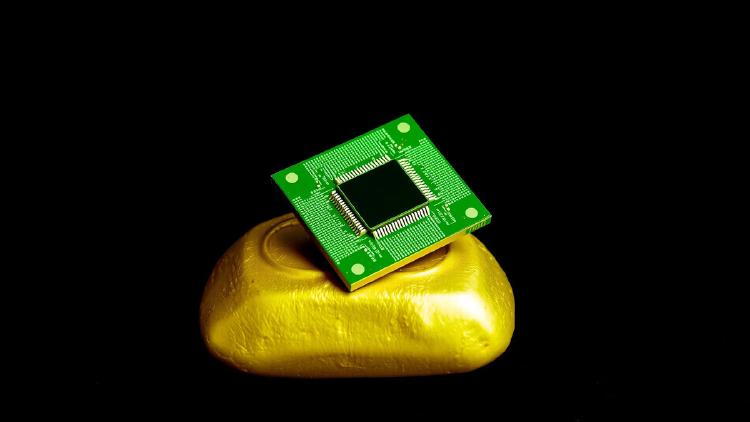
General Compute borrowed $400 million from Upper90 against a fleet of SambaNova SN50 inference chips, the first major AI infrastructure loan not collateralized by Nvidia hardware.
LM Studio launched Bionic, a standalone agent app that routes coding and document work between local open models and a Zero Data Retention cloud tier.

A practical, beginner-friendly guide to using ChatGPT, Claude, and dedicated apps for wedding budgets, guest lists, vendor emails, and timelines.

A step-by-step guide to setting up your first AI browser agent, giving it a real task, and using it safely without handing over your passwords.

A step-by-step guide for teachers on using AI tools to save hours on lesson planning, feedback, and parent communications - no technical background required.

Moonshot's Kimi K3 tops LMArena's Frontend Code Arena and undercuts Opus 4.8 on cost per task, but a tripled price tag, a rising hallucination rate, and an unresolved distillation question complicate the win.

xAI's terminal coding agent is quick, cheap, and picks up your Claude Code and Codex sessions - but a researcher just caught it uploading entire Git repositories without consent.

Moonshot AI's Kimi K2.7-Code became the first open-weight model in GitHub Copilot's picker, pairing genuine cost savings with a benchmark story that only Moonshot has verified.

Terminal-Bench 2.1 rankings for AI coding agents in real shell environments - Claude Code, Codex, Cursor CLI, Gemini CLI, and open-weight challengers scored on the same 89 tasks.

Updated July 2026 Chatbot Arena Elo rankings from Arena.ai: 7M+ votes across 368 models, Claude Opus 4.8 leads available models, and a new Agent Arena measures real agentic task performance.

June 2026 overall LLM rankings covering Claude Fable 5, Claude Opus 4.8, GPT-5.5, Gemini 3.1 Pro, and the open-weight models catching up fast.

Bonsai 27B compresses Alibaba's Qwen3.6-27B into 1-bit and ternary weights, shrinking a 54GB model to as little as 3.9GB so it runs on an iPhone.

Moonshot AI's Kimi K3 is a 2.8 trillion parameter MoE model that tops LMArena's Frontend Code Arena and nears Claude Fable 5 on intelligence benchmarks, but at roughly triple Kimi K2.6's price and a higher hallucination rate.

Snowflake's reasoning-first text-to-SQL model tops the BIRD benchmark at 71.83% execution accuracy, trained with GRPO and a reward that only checks if the SQL runs correctly.
Nonprofit Current AI wants a free, public alternative to Big Tech's AI models, and it has $400 million and a chatbot to show for it so far.
Tracking AI supply-chain attacks, agent exploits, prompt injection, model leaks, and the real-world incidents shaping AI security today.
Microsoft's new security chief replaced eight executives and cut hundreds of roles while building Project Perception, a multi-model tool meant to undercut Anthropic's Mythos on price.
Patreon partnered with Cloudflare to block AI training bots at the network level, moving past robots.txt requests that crawlers were already ignoring.
Databricks signed a term sheet for a $188 billion valuation days after quietly making a Chinese open-weight model its default coding engine over Anthropic.
PrismML compressed a 27B-parameter Qwen model from 54GB to under 4GB using 1-bit and ternary weights, and Apple is evaluating the technology for on-device Siri.
Bonsai 27B compresses Alibaba's Qwen3.6-27B into 1-bit and ternary weights, shrinking a 54GB model to as little as 3.9GB so it runs on an iPhone.
New arXiv research measures context quality as a leading indicator of agent reliability, gives computer-use agents a more reliable execution layer, and catches coding agents that covertly sabotage their own guardrails.
General Compute borrowed $400 million from Upper90 against a fleet of SambaNova SN50 inference chips, the first major AI infrastructure loan not collateralized by Nvidia hardware.
Moonshot's Kimi K3 tops LMArena's Frontend Code Arena and undercuts Opus 4.8 on cost per task, but a tripled price tag, a rising hallucination rate, and an unresolved distillation question complicate the win.
LM Studio launched Bionic, a standalone agent app that routes coding and document work between local open models and a Zero Data Retention cloud tier.

Beijing's new World AI Cooperation Organization signed up 29 nations in Shanghai, weeks after Washington's rival Pax Silica bloc grew to roughly two dozen. Kazakhstan joined both.