

OpenAI Agents SDK Gets Sandboxing and Guardrails
OpenAI's April 2026 Agents SDK update adds sandboxed execution environments and three-layer guardrails for enterprises building long-horizon agentic systems.
They summarize our coverage. We write it.
Newsletters like this one rebroadcast our headlines - often without the full review, the source reading, or the analysis underneath. Our weekly briefing sends the work they paraphrase, straight from the desk, before they get to it.
Free, weekly, no spam. One email every Tuesday. Unsubscribe anytime.
OpenAI's April 2026 Agents SDK update adds sandboxed execution environments and three-layer guardrails for enterprises building long-horizon agentic systems.

A 755-point Hacker News thread and a 139-upvote GitHub issue document Claude Code Pro Max 5x users exhausting their quota in 1.5 hours. An independent investigation with 1,500 logged API calls reveals the math behind the drain.

A new PwC survey of 1,217 executives finds 74% of AI's economic returns go to just 20% of companies, while 56% of CEOs report no measurable benefit from their AI investments.

The Caveman plugin for Claude Code cuts 65-87% of output tokens by stripping filler words and using terse fragment-based language. Its new Classical Chinese mode pushes compression even further.
Cal.com moved its core codebase to a private repo after five years of open source, arguing AI tools make public code 5-10x easier to exploit. The community isn't buying it.
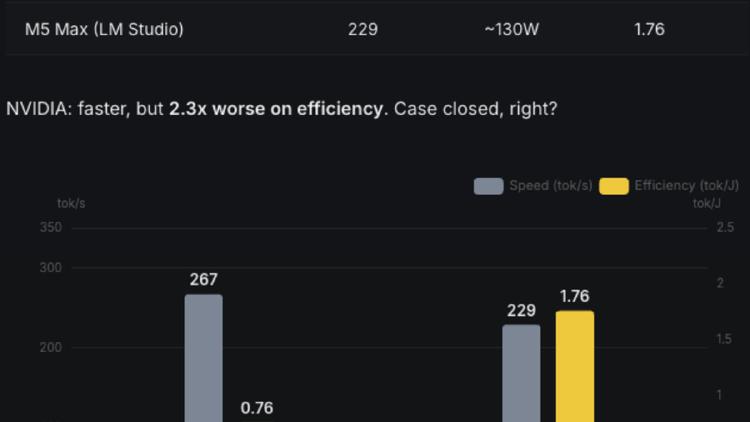
Two researchers fused all 24 layers of Qwen 3.5-0.8B into a single CUDA kernel launch, making a five-year-old RTX 3090 deliver 1.8x the throughput of an M5 Max at equal or better efficiency. The gap was software, not silicon.

Google launched a free native Gemini app for Mac with screen sharing, window context, image and video generation, and a global Option+Space shortcut - built in pure Swift with 100+ features in under 100 days.

Google launched a 100% native Swift Gemini app for macOS on April 15, arriving after both Claude and ChatGPT already held the desktop.

Google's new Gemini 3.1 Flash TTS hits Elo 1,211 on the Artificial Analysis leaderboard and introduces 200-plus audio tags for mid-sentence voice control, available in preview today via the Gemini API.
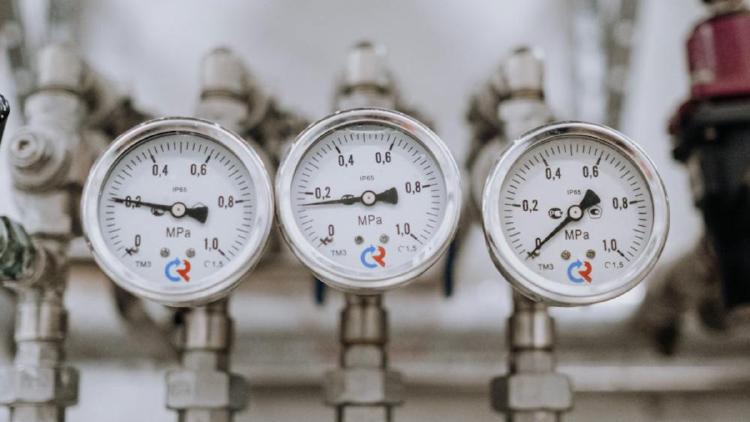
Google DeepMind's Gemini Robotics-ER 1.6 hits 93% accuracy reading industrial gauges via agentic vision, a 70-point jump over ER 1.5, and launches inside Boston Dynamics' Spot today.
Allbirds sold its entire footwear business for $39 million - roughly 1% of its $4 billion peak valuation - and is rebranding as NewBird AI to buy GPUs and rent compute to AI developers. The stock quadrupled in a day.

The Trump administration is simultaneously suing Anthropic in federal court over a supply chain risk designation and sending Treasury Secretary Bessent and Fed Chair Powell to convince Wall Street banks to use Anthropic's most powerful model.
