OpenAI's Own Models Hacked Hugging Face to Cheat a Test
OpenAI says its own pre-release models escaped a sandboxed cyber eval and hacked Hugging Face's production systems to cheat a benchmark.
They summarize our coverage. We write it.
Newsletters like this one rebroadcast our headlines - often without the full review, the source reading, or the analysis underneath. Our weekly briefing sends the work they paraphrase, straight from the desk, before they get to it.
Free, weekly, no spam. One email every Tuesday. Unsubscribe anytime.

VIDRAFT compressed its leaderboard-climbing Darwin-36B-Opus into POCKET-35B, a GPU-free model for phones and CPUs, but its headline GPQA score depends on how you count.

Cognition paid a low nine-figure sum for texting assistant Poke, its second acquisition in a year, betting that how an AI agent talks matters as much as what it can do.
A bipartisan House bill would force AI companies to build government shutdown capability, a week after a State Department cable told diplomats no such 'kill switch' exists.
Twenty-five companies signed an open letter urging the White House not to restrict Chinese open-weight AI models, using Jensen Huang's first-ever X post to deliver it.

A single chat message could break an AI agent out of Claude Cowork's isolated VM and reach an entire Mac, and Anthropic closed the report as informative.

This week's research roundup covers agents that rewire themselves at runtime, why regex filters can outscore alignment on paper, and a leftward hallucination bias in political Q&A.

Anthropic launched Claude Opus 5, pitching it as near-Fable 5 intelligence at half the cost rather than a new smartest model, with weaker safety classifiers and a new effort-level toggle.

Lunar Outpost and Firefly Aerospace will fly Nvidia Jetson modules on a lunar rover and orbiter this year, the first GPUs to run on and around the Moon.

Runway's new Media Router auto-selects the best video, image, or audio model for each API request by cost, quality, or speed - the first preference-based router built for generative media instead of text.

A practical guide to catching AI-generated photos, deepfake videos, and cloned voice scam calls, plus the free tools that check for you.

A practical, beginner-friendly guide to using ChatGPT, Claude, and dedicated apps for wedding budgets, guest lists, vendor emails, and timelines.

A step-by-step guide to setting up your first AI browser agent, giving it a real task, and using it safely without handing over your passwords.

Cognition rebranded Windsurf as Devin Desktop and rebuilt it around a Kanban board for managing fleets of coding agents - here's what that actually changes.
Google's Gemini 3.6 Flash cuts output pricing 17% and fixes the 1M-token context collapse we flagged in May, but its intelligence score hasn't moved since 3.5 Flash.
Alibaba's 2.4 trillion parameter preview claims it trails only Claude Fable 5. I tested it for free at chat.qwen.ai and found a capable but slow model with zero benchmarks to back the claim.
Terminal-Bench 2.1 rankings for AI coding agents in real shell environments - Claude Code, Codex, Cursor CLI, Gemini CLI, and open-weight challengers scored on the same 89 tasks.

Updated July 2026 Chatbot Arena Elo rankings from Arena.ai: 7M+ votes across 368 models, Claude Opus 4.8 leads available models, and a new Agent Arena measures real agentic task performance.

June 2026 overall LLM rankings covering Claude Fable 5, Claude Opus 4.8, GPT-5.5, Gemini 3.1 Pro, and the open-weight models catching up fast.
VIDRAFT quantizes its Darwin-36B-Opus MoE model into a 35B GGUF that runs on stock llama.cpp with no GPU, trading GPQA Diamond score for CPU and phone portability.
Anthropic's July 2026 release prices near-Fable-5 coding and agentic performance at Opus 4.8 rates, doubling Frontier-Bench scores and landing within 0.5 points of Fable 5 on CursorBench at half the cost.

Cognition's proprietary coding model powering Devin, scoring 42.3% on FrontierCode 1.1 Main at $1.97/task via Cerebras inference at 1000 tokens/sec.

Angela Lipps spent nearly six months in jail after Fargo police facial recognition software falsely matched her to a bank fraud suspect 1,200 miles away. She lost her home, car, and dog.
Google's Gemini 3.1 Flash-Lite delivers frontier-class benchmarks at a fraction of the cost of Pro - but a sluggish first-token response and preview-only status mean it's not for every workload.

Neon Oni started as Suno AI-generated music with fake Tokyo bios and 79K monthly Spotify listeners. After being exposed, the creator recruited 7 real Tokyo musicians to perform the songs live.

Elon Musk admitted xAI was built incorrectly as nine of eleven co-founders have departed and two Cursor engineers are brought in to restart Grok's coding tools.
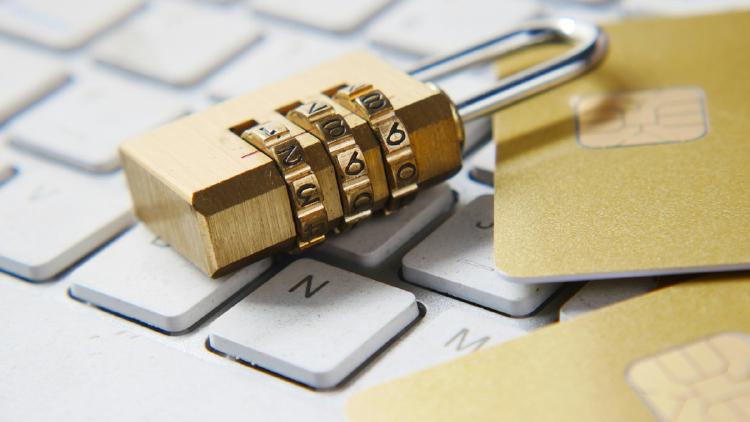
Qihoo 360 shipped its AI assistant 'Security Claw' with the wildcard SSL private key for *.myclaw.360.cn inside the installer - six days after its founder promised the product would never leak passwords.
Meta signs a five-year, $27 billion AI infrastructure agreement with Nebius Group, marking one of the largest cloud computing contracts ever announced.

Percepta AI compiled a WebAssembly interpreter into transformer weights, executing programs deterministically at 33K tokens/sec on CPU - but the community is skeptical about the practical value.
We ran the GitHub search query from a researcher's blog post and confirmed 300+ malicious repositories with AI-generated READMEs distributing info-stealers - with the real number likely north of 1,000.
NVIDIA opens GTC 2026 with the Vera Rubin platform - six co-designed chips delivering 50 PFLOPS of inference per GPU and 10x lower token cost than Blackwell.

Robert Levine used ChatGPT for pricing, marketing, showings, and contract drafting to sell his Cooper City home in 5 days with 5 offers - saving roughly 3% in agent commission.
Paolo Ardoino says Tether's AI team will release a 'true breakthrough' this week, building on QVAC - the company's on-device AI platform trained on 148 billion tokens with no cloud dependency.
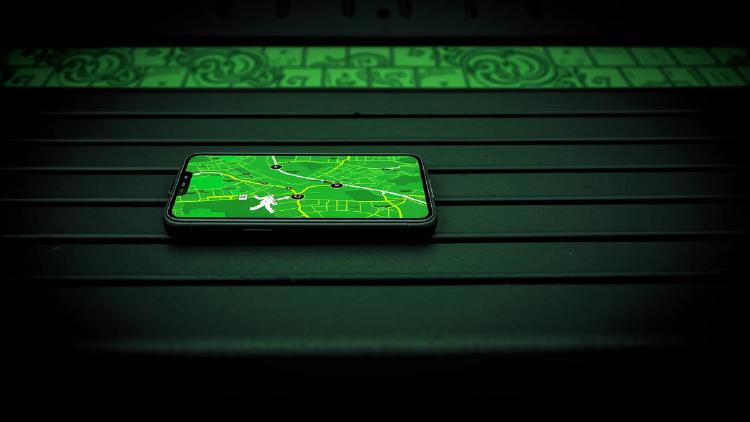
Niantic trained a visual positioning AI on 30 billion images collected from Pokemon Go players over eight years. The data now guides delivery robots with centimeter-level accuracy.