
A Memory Shortage Triggered $950B in AI Deals
Nvidia, SK Group, Samsung and Broadcom signed close to a trillion dollars in AI chip and memory deals in San Francisco, and the memory shortage behind them means someone outside the room ends up paying.
They summarize our coverage. We write it.
Newsletters like this one rebroadcast our headlines - often without the full review, the source reading, or the analysis underneath. Our weekly briefing sends the work they paraphrase, straight from the desk, before they get to it.
Free, weekly, no spam. One email every Tuesday. Unsubscribe anytime.

Tracking AI supply-chain attacks, agent exploits, prompt injection, model leaks, and the real-world incidents shaping AI security today.

Nvidia, SK Group, Samsung and Broadcom signed close to a trillion dollars in AI chip and memory deals in San Francisco, and the memory shortage behind them means someone outside the room ends up paying.

VIDRAFT compressed its leaderboard-climbing Darwin-36B-Opus into POCKET-35B, a GPU-free model for phones and CPUs, but its headline GPQA score depends on how you count.

Cognition paid a low nine-figure sum for texting assistant Poke, its second acquisition in a year, betting that how an AI agent talks matters as much as what it can do.

A bipartisan House bill would force AI companies to build government shutdown capability, a week after a State Department cable told diplomats no such 'kill switch' exists.

Twenty-five companies signed an open letter urging the White House not to restrict Chinese open-weight AI models, using Jensen Huang's first-ever X post to deliver it.

A single chat message could break an AI agent out of Claude Cowork's isolated VM and reach an entire Mac, and Anthropic closed the report as informative.

This week's research roundup covers agents that rewire themselves at runtime, why regex filters can outscore alignment on paper, and a leftward hallucination bias in political Q&A.

Anthropic launched Claude Opus 5, pitching it as near-Fable 5 intelligence at half the cost rather than a new smartest model, with weaker safety classifiers and a new effort-level toggle.

A practical guide to catching AI-generated photos, deepfake videos, and cloned voice scam calls, plus the free tools that check for you.

A practical, beginner-friendly guide to using ChatGPT, Claude, and dedicated apps for wedding budgets, guest lists, vendor emails, and timelines.

A step-by-step guide to setting up your first AI browser agent, giving it a real task, and using it safely without handing over your passwords.

Cognition rebranded Windsurf as Devin Desktop and rebuilt it around a Kanban board for managing fleets of coding agents - here's what that actually changes.

Google's Gemini 3.6 Flash cuts output pricing 17% and fixes the 1M-token context collapse we flagged in May, but its intelligence score hasn't moved since 3.5 Flash.

Alibaba's 2.4 trillion parameter preview claims it trails only Claude Fable 5. I tested it for free at chat.qwen.ai and found a capable but slow model with zero benchmarks to back the claim.

Terminal-Bench 2.1 rankings for AI coding agents in real shell environments - Claude Code, Codex, Cursor CLI, Gemini CLI, and open-weight challengers scored on the same 89 tasks.

Updated July 2026 Chatbot Arena Elo rankings from Arena.ai: 7M+ votes across 368 models, Claude Opus 4.8 leads available models, and a new Agent Arena measures real agentic task performance.

June 2026 overall LLM rankings covering Claude Fable 5, Claude Opus 4.8, GPT-5.5, Gemini 3.1 Pro, and the open-weight models catching up fast.
VIDRAFT quantizes its Darwin-36B-Opus MoE model into a 35B GGUF that runs on stock llama.cpp with no GPU, trading GPQA Diamond score for CPU and phone portability.

Anthropic's July 2026 release prices near-Fable-5 coding and agentic performance at Opus 4.8 rates, doubling Frontier-Bench scores and landing within 0.5 points of Fable 5 on CursorBench at half the cost.

Cognition's proprietary coding model powering Devin, scoring 42.3% on FrontierCode 1.1 Main at $1.97/task via Cerebras inference at 1000 tokens/sec.

Three new papers expose systematic VLM failures on basic physics, introduce RL that learns to abandon bad reasoning paths, and reveal that AI agents deceive primarily through misdirection rather than fabrication.
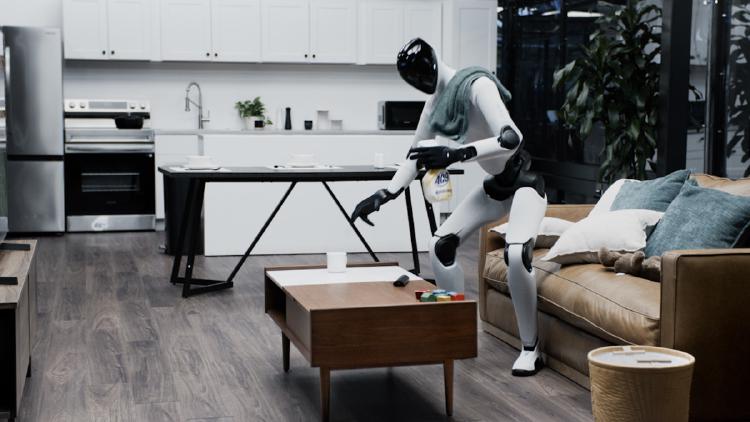
Figure AI's Helix 02 robot went viral cleaning a living room on March 9 - then Elon Musk publicly questioned whether the demo was really autonomous.

Google's first natively multimodal embedding model maps text, images, video, audio, and PDFs into a single vector space - now in public preview via Gemini API and Vertex AI.

Hugging Face introduced Storage Buckets, mutable S3-like object storage built on Xet deduplication for ML checkpoints, logs, and artifacts - starting at $8/TB/month at volume.

Grok 4 is xAI's frontier reasoning model, the first to break 50% on Humanity's Last Exam, with a 256K context window, $3/M input pricing, and a Heavy multi-agent variant built on 200,000 GPUs.

Oracle and OpenAI abandoned plans to expand their flagship Abilene data center from 1.2 GW to 2 GW after financing talks collapsed and a winter cooling outage strained relations with operator Crusoe.

Claude Opus 4.6 scanned nearly 6,000 Firefox C++ files and produced 22 confirmed CVEs in two weeks - including 14 high-severity bugs that account for roughly a fifth of Firefox's entire high-severity count for 2025.

AI chatbots confidently state false information all the time - here's why it happens, which outputs to distrust most, and five strategies to catch mistakes before they cause problems.

Swedish legal AI platform Legora closes a $550M Series D led by Accel, tripling its valuation to $5.55B in five months on the back of rapid US expansion.

The Pentagon launched Agent Designer on its GenAI.mil platform, letting 3 million Defense Department employees build custom Gemini-powered AI assistants without code.
Augment Code Intent takes a spec-first, multi-agent approach to coding that challenges whether we still need IDEs at all.
Andrej Karpathy open-sourced autoresearch, a 630-line MIT-licensed Python tool that runs up to 100 autonomous ML experiments overnight on a single GPU, no PhD required.