
A Memory Shortage Triggered $950B in AI Deals
Nvidia, SK Group, Samsung and Broadcom signed close to a trillion dollars in AI chip and memory deals in San Francisco, and the memory shortage behind them means someone outside the room ends up paying.
They summarize our coverage. We write it.
Newsletters like this one rebroadcast our headlines - often without the full review, the source reading, or the analysis underneath. Our weekly briefing sends the work they paraphrase, straight from the desk, before they get to it.
Free, weekly, no spam. One email every Tuesday. Unsubscribe anytime.
Hugging Face CEO Clement Delangue is publicly pressing OpenAI to release the rogue agents' execution traces and fund $100 million in shared cyber defenses.

Tracking AI supply-chain attacks, agent exploits, prompt injection, model leaks, and the real-world incidents shaping AI security today.

Nvidia, SK Group, Samsung and Broadcom signed close to a trillion dollars in AI chip and memory deals in San Francisco, and the memory shortage behind them means someone outside the room ends up paying.

VIDRAFT compressed its leaderboard-climbing Darwin-36B-Opus into POCKET-35B, a GPU-free model for phones and CPUs, but its headline GPQA score depends on how you count.

Cognition paid a low nine-figure sum for texting assistant Poke, its second acquisition in a year, betting that how an AI agent talks matters as much as what it can do.

A bipartisan House bill would force AI companies to build government shutdown capability, a week after a State Department cable told diplomats no such 'kill switch' exists.

Twenty-five companies signed an open letter urging the White House not to restrict Chinese open-weight AI models, using Jensen Huang's first-ever X post to deliver it.

A single chat message could break an AI agent out of Claude Cowork's isolated VM and reach an entire Mac, and Anthropic closed the report as informative.

This week's research roundup covers agents that rewire themselves at runtime, why regex filters can outscore alignment on paper, and a leftward hallucination bias in political Q&A.

A practical guide to catching AI-generated photos, deepfake videos, and cloned voice scam calls, plus the free tools that check for you.

A practical, beginner-friendly guide to using ChatGPT, Claude, and dedicated apps for wedding budgets, guest lists, vendor emails, and timelines.

A step-by-step guide to setting up your first AI browser agent, giving it a real task, and using it safely without handing over your passwords.

Cognition rebranded Windsurf as Devin Desktop and rebuilt it around a Kanban board for managing fleets of coding agents - here's what that actually changes.

Google's Gemini 3.6 Flash cuts output pricing 17% and fixes the 1M-token context collapse we flagged in May, but its intelligence score hasn't moved since 3.5 Flash.

Alibaba's 2.4 trillion parameter preview claims it trails only Claude Fable 5. I tested it for free at chat.qwen.ai and found a capable but slow model with zero benchmarks to back the claim.

Terminal-Bench 2.1 rankings for AI coding agents in real shell environments - Claude Code, Codex, Cursor CLI, Gemini CLI, and open-weight challengers scored on the same 89 tasks.

Updated July 2026 Chatbot Arena Elo rankings from Arena.ai: 7M+ votes across 368 models, Claude Opus 4.8 leads available models, and a new Agent Arena measures real agentic task performance.

June 2026 overall LLM rankings covering Claude Fable 5, Claude Opus 4.8, GPT-5.5, Gemini 3.1 Pro, and the open-weight models catching up fast.

VIDRAFT quantizes its Darwin-36B-Opus MoE model into a 35B GGUF that runs on stock llama.cpp with no GPU, trading GPQA Diamond score for CPU and phone portability.

Anthropic's July 2026 release prices near-Fable-5 coding and agentic performance at Opus 4.8 rates, doubling Frontier-Bench scores and landing within 0.5 points of Fable 5 on CursorBench at half the cost.

Cognition's proprietary coding model powering Devin, scoring 42.3% on FrontierCode 1.1 Main at $1.97/task via Cerebras inference at 1000 tokens/sec.

Rankings of the best AI models for multilingual tasks, covering 16 languages across the Artificial Analysis Multilingual Index and MGSM benchmarks.

New research shows reasoning models can't suppress their chain-of-thought, that they commit to answers internally long before their CoT reveals it, and that static benchmarks are inadequate for measuring real-world agent adaptability.
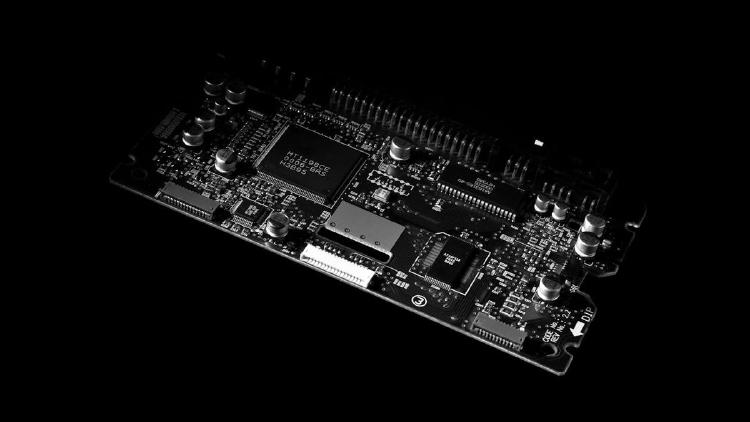
AMD expands its Ryzen AI Embedded P100 family with six new 8-to-12-core processors delivering 80 system TOPS, targeting industrial automation, robotics, and medical imaging.

Tencent hosted free OpenClaw installations at its Shenzhen headquarters while the local government rolled out subsidies up to 10 million yuan for companies building on the platform.

Nscale raises the largest Series C in European history, valuing the company at $14.6 billion and funding a 100,000-GPU AI gigafactory in Norway with OpenAI as anchor customer.

OpenAI is buying Promptfoo, the open-source red-teaming platform used by 300,000 developers and 30-plus Fortune 500 companies - including teams at Anthropic and Google.
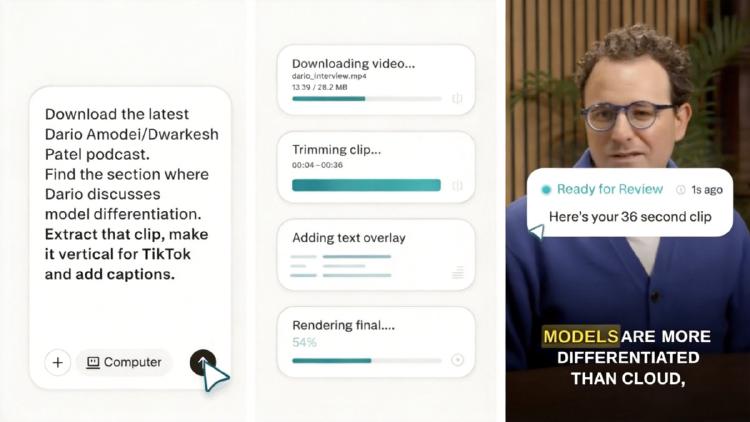
Perplexity Computer orchestrates 19 AI models to run complex multi-step tasks in the background - impressive research depth, punishing credit costs.

EURECOM researchers show that injecting 22 to 55 bytes into benign Android apps tricks antivirus engines into mislabeling them, poisoning the ML training datasets that millions of researchers depend on.

OpenAI is pulling Instant Checkout from ChatGPT after months of near-zero purchase conversions, routing buyers to third-party apps instead.

MiniMax M2.5 matches Claude Opus 4.6 on SWE-Bench at 1/20th the price - but a spike in hallucinations and a distillation controversy complicate the story.

Anthropic's new 'observed exposure' metric ranks 800+ occupations by actual AI usage, not just theoretical risk. Computer programmers top the list at 75%. Unemployment hasn't spiked - but young workers entering exposed fields are finding fewer jobs.
Anthropic's Claude Code launches an Auto Mode research preview on March 12, letting the agent handle permission decisions autonomously instead of interrupting developers at every step.