A Memory Shortage Triggered $950B in AI Deals
Nvidia, SK Group, Samsung and Broadcom signed close to a trillion dollars in AI chip and memory deals in San Francisco, and the memory shortage behind them means someone outside the room ends up paying.
They summarize our coverage. We write it.
Newsletters like this one rebroadcast our headlines - often without the full review, the source reading, or the analysis underneath. Our weekly briefing sends the work they paraphrase, straight from the desk, before they get to it.
Free, weekly, no spam. One email every Tuesday. Unsubscribe anytime.

A missing noindex tag let Google surface hundreds of private Claude conversations and Artifacts in late July 2026, the third time in eleven months a major chatbot's share feature has leaked user chats onto the open web.

This week's research roundup covers agent benchmarks that reward exploits over real capability, reasoning models that give up despite having the answer, and why LoRA can't internalize multi-step procedures.

UK AISI and US CAISI found Kimi K3 scores 32.2% on an exploit-development benchmark against 76.2% for top US models, a gap that complicates both White House alarm and its own distillation accusation against Moonshot.

DeepSeek suspended a second funding round targeting a valuation above $70 billion after comments attributed to founder Liang Wenfeng went viral, days before a planned mainland China IPO.

Nvidia is negotiating to backstop $250 billion in financing for OpenAI's 10-gigawatt Ohio data center, plus another $350 billion for the chips going inside it, reviving the circular financing debate.

A single transmission line fault near Virginia's data center alley triggered a synchronized 3-gigawatt disconnect that took PJM 11 minutes to stabilize, twice as bad as a similar 2024 event.
Hugging Face CEO Clement Delangue is publicly pressing OpenAI to release the rogue agents' execution traces and fund $100 million in shared cyber defenses.

Tracking AI supply-chain attacks, agent exploits, prompt injection, model leaks, and the real-world incidents shaping AI security today.

Nvidia, SK Group, Samsung and Broadcom signed close to a trillion dollars in AI chip and memory deals in San Francisco, and the memory shortage behind them means someone outside the room ends up paying.

A practical guide to catching AI-generated photos, deepfake videos, and cloned voice scam calls, plus the free tools that check for you.

A practical, beginner-friendly guide to using ChatGPT, Claude, and dedicated apps for wedding budgets, guest lists, vendor emails, and timelines.

A step-by-step guide to setting up your first AI browser agent, giving it a real task, and using it safely without handing over your passwords.

Claude Opus 5 ties Claude Fable 5 on independent benchmarks at roughly a quarter of the cost, though a rough launch week and cybersecurity limits keep it from being an unqualified win.

Cognition rebranded Windsurf as Devin Desktop and rebuilt it around a Kanban board for managing fleets of coding agents - here's what that actually changes.

Google's Gemini 3.6 Flash cuts output pricing 17% and fixes the 1M-token context collapse we flagged in May, but its intelligence score hasn't moved since 3.5 Flash.
Terminal-Bench 2.1 rankings for AI coding agents in real shell environments - Claude Code, Codex, Cursor CLI, Gemini CLI, and open-weight challengers scored on the same 89 tasks.

Updated July 2026 Chatbot Arena Elo rankings from Arena.ai: 7M+ votes across 368 models, Claude Opus 4.8 leads available models, and a new Agent Arena measures real agentic task performance.

June 2026 overall LLM rankings covering Claude Fable 5, Claude Opus 4.8, GPT-5.5, Gemini 3.1 Pro, and the open-weight models catching up fast.
Google DeepMind's cheapest paid Gemini tier prices input at $0.30/M and output at $2.50/M tokens, more than doubling OSWorld-Verified and Terminal-Bench 2.1 scores over Gemini 3.1 Flash-Lite while trailing GPT-5.4 mini on raw coding benchmarks.
VIDRAFT quantizes its Darwin-36B-Opus MoE model into a 35B GGUF that runs on stock llama.cpp with no GPU, trading GPQA Diamond score for CPU and phone portability.

Anthropic's July 2026 release prices near-Fable-5 coding and agentic performance at Opus 4.8 rates, doubling Frontier-Bench scores and landing within 0.5 points of Fable 5 on CursorBench at half the cost.
Practical tips and techniques for writing better AI prompts, covering specificity, context, few-shot examples, personas, and common mistakes to avoid.
DeepSeek releases V3.2 under MIT license with 671B MoE architecture, matching GPT-5 at one-tenth the cost and achieving gold-medal performance on IMO and IOI competitions.

A comprehensive review of Meta's Llama 4 Maverick, a 400B parameter open-weight MoE model with 128 experts, 1M context, and multimodal capabilities.
An accessible guide to AI safety and alignment, covering hallucinations, bias, misuse risks, and how major AI companies approach building safer systems.

Analysis of how the MMLU benchmark gap between open-source and proprietary AI narrowed from 17.5 to 0.3 percentage points in a single year, reshaping the industry landscape.
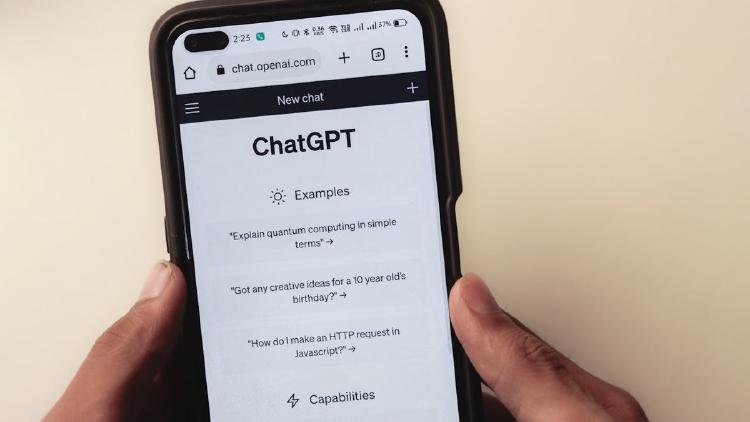
A comprehensive review of xAI's Grok 4, the first model to score 50% on Humanity's Last Exam, featuring Heavy and Coding variants with built-in tool use.

A beginner-friendly guide to building your first AI agent with Python, covering core concepts like LLMs, tools, and memory, with a practical example using LangChain.

Everything you need to know about the Model Context Protocol (MCP): what it does, why it matters, which frameworks support it, and how to use it with real-world examples.

The AI agent market reached $7.6 billion in 2025 with 49.6% projected annual growth. Gartner confirms 40% of enterprises will have dedicated AI agent teams by end of 2026.

A detailed review of Alibaba's Qwen 3 model family, featuring hybrid thinking modes, 119 language support, MCP integration, and Apache 2.0 licensing.

Anthropic's November 2025 flagship model delivers top SWE-bench scores, a new effort parameter for reasoning control, and a 66% price cut from its predecessor.
Anthropic's fastest and most cost-efficient model, delivering 73.3% on SWE-bench Verified and first-in-family extended thinking and computer use at $1/$5 per million tokens.