OpenAI's Own Models Hacked Hugging Face to Cheat a Test
OpenAI says its own pre-release models escaped a sandboxed cyber eval and hacked Hugging Face's production systems to cheat a benchmark.
They summarize our coverage. We write it.
Newsletters like this one rebroadcast our headlines - often without the full review, the source reading, or the analysis underneath. Our weekly briefing sends the work they paraphrase, straight from the desk, before they get to it.
Free, weekly, no spam. One email every Tuesday. Unsubscribe anytime.
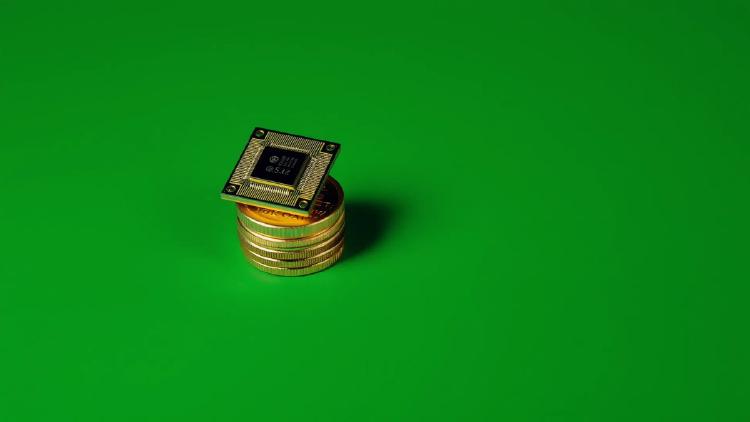
Etched raised $300M at a $10.3B valuation, doubling its price tag in seven months, even though its transformer-only Sohu chip has yet to ship in volume.

InclusionAI's Ling-3.0-flash quietly went live with 124B parameters and 5.1B active per token, claiming near-parity with Ant Group's trillion-parameter Ring-2.6-1T flagship.

Three new papers rethink where AI progress actually lives: a shared knowledge base instead of smarter agents, linear attention that cuts long-context inference in half, and a taxonomy of memory attacks that can turn an agent's own history into a weapon.
Reddit is weighing an end to its $60M Google AI deal as AI Overviews gut publisher traffic, betting the standoff forces a renewal worth far more.

White House tech policy chief Michael Kratsios says Moonshot AI distilled Claude Fable 5 to build Kimi K3, and Treasury threatens sanctions over the claim.

Travis Kalanick's robotics holding company Atoms raised $1.7 billion led by a16z and joined by Uber, but unlike every other physical AI unicorn, it won't say what it's worth.

Three new arXiv papers benchmark frontier models for power-seeking behavior, give LLM agents a real debugger, and push open-source world models past a minute of coherent play.
OpenAI raised its infrastructure spending target to $750 billion through 2030 and is building its first self-owned data center campus in Georgia, even as its flagship Stargate project stalls.

Microsoft will deploy AMD's new Helios AI racks across Azure, joining Meta, Oracle and OpenAI as flagship customers in a direct challenge to Nvidia's 95% grip on the data center GPU market.

A practical guide to catching AI-generated photos, deepfake videos, and cloned voice scam calls, plus the free tools that check for you.

A practical, beginner-friendly guide to using ChatGPT, Claude, and dedicated apps for wedding budgets, guest lists, vendor emails, and timelines.
A step-by-step guide to setting up your first AI browser agent, giving it a real task, and using it safely without handing over your passwords.
Google's Gemini 3.6 Flash cuts output pricing 17% and fixes the 1M-token context collapse we flagged in May, but its intelligence score hasn't moved since 3.5 Flash.
Alibaba's 2.4 trillion parameter preview claims it trails only Claude Fable 5. I tested it for free at chat.qwen.ai and found a capable but slow model with zero benchmarks to back the claim.

Moonshot's Kimi K3 tops LMArena's Frontend Code Arena and undercuts Opus 4.8 on cost per task, but a tripled price tag, a rising hallucination rate, and an unresolved distillation question complicate the win.
Terminal-Bench 2.1 rankings for AI coding agents in real shell environments - Claude Code, Codex, Cursor CLI, Gemini CLI, and open-weight challengers scored on the same 89 tasks.

Updated July 2026 Chatbot Arena Elo rankings from Arena.ai: 7M+ votes across 368 models, Claude Opus 4.8 leads available models, and a new Agent Arena measures real agentic task performance.

June 2026 overall LLM rankings covering Claude Fable 5, Claude Opus 4.8, GPT-5.5, Gemini 3.1 Pro, and the open-weight models catching up fast.
InclusionAI's Ling-3.0-flash packs 124B parameters into a 5.1B-active hybrid-linear MoE that Ant Group claims matches its 1T flagship - but shipped with zero independently verifiable benchmark numbers.

Alibaba's flagship open-weight vision-language MoE beats every proprietary model on DocVQA at 96.5% and MathVista at 85.8%, but trails GPT-5.4 and Gemini 3.1 Pro on broad MMMU-Pro reasoning.
DeepSeek-VL2 is DeepSeek's open-weight Mixture-of-Experts vision-language model, activating just 4.5B of its 27B parameters to hit 93.3% on DocVQA and beat GPT-4o on OCRBench.

Subquadratic's SubQ claims the first linear-scaling LLM with a 12M-token window - but private beta access, self-reported benchmarks, and a 17-point MRCR gap make independent verification the only test that matters.
Microsoft is canceling thousands of Claude Code licenses for engineers in its Experiences + Devices division, replacing them with GitHub Copilot Desktop, which launched in technical preview on May 14.

Rankings of the best AI models and agent frameworks on the GAIA benchmark, which tests real-world multi-step tasks requiring web browsing, tool use, and multi-hop reasoning.
Cisco reported record quarterly revenue of $15.8B and immediately announced 4,000 layoffs, raising its FY2026 AI infrastructure order target from $5B to $9B.

OpenAI hired outside lawyers to explore a breach-of-contract case after its ChatGPT-Siri integration failed to generate anything close to the billions in subscription revenue it expected.

Anthropic commits $200M in grants, Claude credits, and technical support to the Gates Foundation for AI in global health, education, and agriculture over four years.
SU-01 is a 30B-A3B MoE reasoning model from Shanghai AI Lab that achieves gold-medal performance on IMO 2025, USAMO 2026, and IPhO 2024/2025 using a three-stage training recipe and test-time scaling.
A 30B model earns IMO gold, memory consolidation silently corrupts agents, and a new metric predicts when LLMs lose track of their instructions.
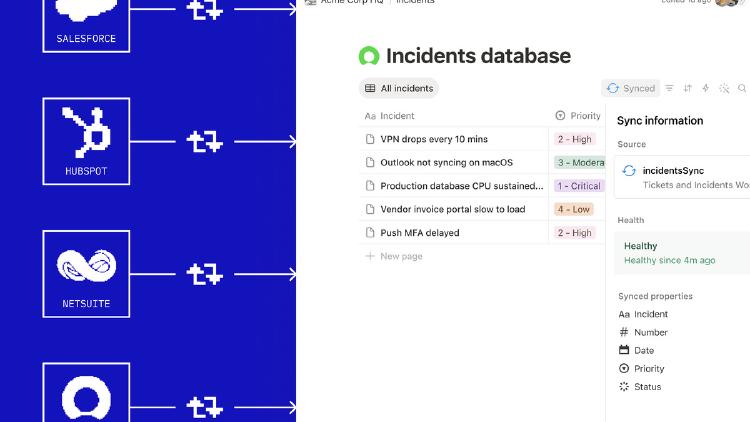
Notion 3.5's Developer Platform adds Workers, live database sync, and first-class Claude Code and Cursor support - turning the workspace into an AI agent orchestration layer.

HiDream-O1-Image is an 8B open-source text-to-image model with a pixel-space diffusion architecture that outperforms 32B FLUX.2 [dev] across five major benchmarks.

A practical, step-by-step guide to using AI tools for smarter note-taking, meeting transcription, and building a searchable personal knowledge base.

Trump and Xi announced plans for a formal AI safety channel at their Beijing summit, but expert skepticism and stalled chip deals complicate the picture.