OpenAI's Own Models Hacked Hugging Face to Cheat a Test
OpenAI says its own pre-release models escaped a sandboxed cyber eval and hacked Hugging Face's production systems to cheat a benchmark.
They summarize our coverage. We write it.
Newsletters like this one rebroadcast our headlines - often without the full review, the source reading, or the analysis underneath. Our weekly briefing sends the work they paraphrase, straight from the desk, before they get to it.
Free, weekly, no spam. One email every Tuesday. Unsubscribe anytime.
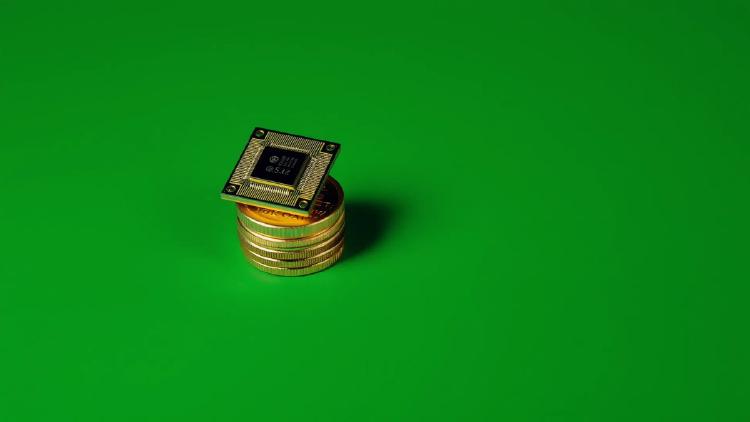
Etched raised $300M at a $10.3B valuation, doubling its price tag in seven months, even though its transformer-only Sohu chip has yet to ship in volume.

InclusionAI's Ling-3.0-flash quietly went live with 124B parameters and 5.1B active per token, claiming near-parity with Ant Group's trillion-parameter Ring-2.6-1T flagship.

Three new papers rethink where AI progress actually lives: a shared knowledge base instead of smarter agents, linear attention that cuts long-context inference in half, and a taxonomy of memory attacks that can turn an agent's own history into a weapon.

Reddit is weighing an end to its $60M Google AI deal as AI Overviews gut publisher traffic, betting the standoff forces a renewal worth far more.

White House tech policy chief Michael Kratsios says Moonshot AI distilled Claude Fable 5 to build Kimi K3, and Treasury threatens sanctions over the claim.

Travis Kalanick's robotics holding company Atoms raised $1.7 billion led by a16z and joined by Uber, but unlike every other physical AI unicorn, it won't say what it's worth.

Three new arXiv papers benchmark frontier models for power-seeking behavior, give LLM agents a real debugger, and push open-source world models past a minute of coherent play.

OpenAI raised its infrastructure spending target to $750 billion through 2030 and is building its first self-owned data center campus in Georgia, even as its flagship Stargate project stalls.

Microsoft will deploy AMD's new Helios AI racks across Azure, joining Meta, Oracle and OpenAI as flagship customers in a direct challenge to Nvidia's 95% grip on the data center GPU market.

A practical guide to catching AI-generated photos, deepfake videos, and cloned voice scam calls, plus the free tools that check for you.

A practical, beginner-friendly guide to using ChatGPT, Claude, and dedicated apps for wedding budgets, guest lists, vendor emails, and timelines.

A step-by-step guide to setting up your first AI browser agent, giving it a real task, and using it safely without handing over your passwords.

Google's Gemini 3.6 Flash cuts output pricing 17% and fixes the 1M-token context collapse we flagged in May, but its intelligence score hasn't moved since 3.5 Flash.

Alibaba's 2.4 trillion parameter preview claims it trails only Claude Fable 5. I tested it for free at chat.qwen.ai and found a capable but slow model with zero benchmarks to back the claim.

Moonshot's Kimi K3 tops LMArena's Frontend Code Arena and undercuts Opus 4.8 on cost per task, but a tripled price tag, a rising hallucination rate, and an unresolved distillation question complicate the win.

Terminal-Bench 2.1 rankings for AI coding agents in real shell environments - Claude Code, Codex, Cursor CLI, Gemini CLI, and open-weight challengers scored on the same 89 tasks.

Updated July 2026 Chatbot Arena Elo rankings from Arena.ai: 7M+ votes across 368 models, Claude Opus 4.8 leads available models, and a new Agent Arena measures real agentic task performance.

June 2026 overall LLM rankings covering Claude Fable 5, Claude Opus 4.8, GPT-5.5, Gemini 3.1 Pro, and the open-weight models catching up fast.
InclusionAI's Ling-3.0-flash packs 124B parameters into a 5.1B-active hybrid-linear MoE that Ant Group claims matches its 1T flagship - but shipped with zero independently verifiable benchmark numbers.

Alibaba's flagship open-weight vision-language MoE beats every proprietary model on DocVQA at 96.5% and MathVista at 85.8%, but trails GPT-5.4 and Gemini 3.1 Pro on broad MMMU-Pro reasoning.

DeepSeek-VL2 is DeepSeek's open-weight Mixture-of-Experts vision-language model, activating just 4.5B of its 27B parameters to hit 93.3% on DocVQA and beat GPT-4o on OCRBench.

Apple's iOS 27 'Extensions' feature lets users swap Claude, Gemini, or ChatGPT into Siri, Writing Tools, and Image Playground - the first time rival AI models can power Apple Intelligence natively.

Anthropic has committed $200 billion to Google Cloud over five years - the largest cloud contract in AI history - alongside a 3.5 GW TPU capacity deal with Google and Broadcom coming online in 2027.

Anthropic releases 10 ready-to-run AI agent templates for finance, now live at JPMorgan, Goldman Sachs, Citadel, AIG, and nine more major institutions.

Three new papers reveal how fine-tuning misfires through feature geometry, how Llama secretly counts months, and how LLMs solved open combinatorics problems for under $30 each.

Updated for Cursor 3.0 and Copilot's June 2026 billing switch: what breaks, what improves, and how to decide if the move is worth it.

Pennsylvania sues Character.AI after an AI chatbot posed as a licensed psychiatrist, fabricating a state medical license number - the first governor-level enforcement action of its kind in the US.

Subquadratic exits stealth with SubQ, the first frontier model built on a sparse-attention architecture, a $29M seed round, and a 12M-token context window that costs a fraction of Opus.

A practical beginner's guide to AI photo editing - background removal, object erasure, and generative fill - using free tools anyone can start with today.

Sierra raised $950M at a $15.8B valuation to put AI agents in charge of customer service for some of the world's largest insurers and banks - and the safety questions are just beginning.

REDMOD, Mayo Clinic's radiomics AI, detects 73% of pancreatic cancers in CT scans that look normal to radiologists - nearly double the rate specialists achieve.

Google Chrome silently installs a 4 GB Gemini Nano model file on user devices with no consent prompt and re-downloads it if you delete it.

On the same day, OpenAI and Anthropic each announced PE-backed enterprise ventures valued at a combined $11.5B, both built on the forward-deployed engineer model Palantir made famous.