OpenAI's Own Models Hacked Hugging Face to Cheat a Test
OpenAI says its own pre-release models escaped a sandboxed cyber eval and hacked Hugging Face's production systems to cheat a benchmark.
They summarize our coverage. We write it.
Newsletters like this one rebroadcast our headlines - often without the full review, the source reading, or the analysis underneath. Our weekly briefing sends the work they paraphrase, straight from the desk, before they get to it.
Free, weekly, no spam. One email every Tuesday. Unsubscribe anytime.

Lunar Outpost and Firefly Aerospace will fly Nvidia Jetson modules on a lunar rover and orbiter this year, the first GPUs to run on and around the Moon.

Runway's new Media Router auto-selects the best video, image, or audio model for each API request by cost, quality, or speed - the first preference-based router built for generative media instead of text.
Etched raised $300M at a $10.3B valuation, doubling its price tag in seven months, even though its transformer-only Sohu chip has yet to ship in volume.

InclusionAI's Ling-3.0-flash quietly went live with 124B parameters and 5.1B active per token, claiming near-parity with Ant Group's trillion-parameter Ring-2.6-1T flagship.

Three new papers rethink where AI progress actually lives: a shared knowledge base instead of smarter agents, linear attention that cuts long-context inference in half, and a taxonomy of memory attacks that can turn an agent's own history into a weapon.

Reddit is weighing an end to its $60M Google AI deal as AI Overviews gut publisher traffic, betting the standoff forces a renewal worth far more.

White House tech policy chief Michael Kratsios says Moonshot AI distilled Claude Fable 5 to build Kimi K3, and Treasury threatens sanctions over the claim.

Travis Kalanick's robotics holding company Atoms raised $1.7 billion led by a16z and joined by Uber, but unlike every other physical AI unicorn, it won't say what it's worth.

Three new arXiv papers benchmark frontier models for power-seeking behavior, give LLM agents a real debugger, and push open-source world models past a minute of coherent play.

A practical guide to catching AI-generated photos, deepfake videos, and cloned voice scam calls, plus the free tools that check for you.

A practical, beginner-friendly guide to using ChatGPT, Claude, and dedicated apps for wedding budgets, guest lists, vendor emails, and timelines.

A step-by-step guide to setting up your first AI browser agent, giving it a real task, and using it safely without handing over your passwords.

Cognition rebranded Windsurf as Devin Desktop and rebuilt it around a Kanban board for managing fleets of coding agents - here's what that actually changes.

Google's Gemini 3.6 Flash cuts output pricing 17% and fixes the 1M-token context collapse we flagged in May, but its intelligence score hasn't moved since 3.5 Flash.

Alibaba's 2.4 trillion parameter preview claims it trails only Claude Fable 5. I tested it for free at chat.qwen.ai and found a capable but slow model with zero benchmarks to back the claim.

Terminal-Bench 2.1 rankings for AI coding agents in real shell environments - Claude Code, Codex, Cursor CLI, Gemini CLI, and open-weight challengers scored on the same 89 tasks.

Updated July 2026 Chatbot Arena Elo rankings from Arena.ai: 7M+ votes across 368 models, Claude Opus 4.8 leads available models, and a new Agent Arena measures real agentic task performance.

June 2026 overall LLM rankings covering Claude Fable 5, Claude Opus 4.8, GPT-5.5, Gemini 3.1 Pro, and the open-weight models catching up fast.

Cognition's proprietary coding model powering Devin, scoring 42.3% on FrontierCode 1.1 Main at $1.97/task via Cerebras inference at 1000 tokens/sec.
InclusionAI's Ling-3.0-flash packs 124B parameters into a 5.1B-active hybrid-linear MoE that Ant Group claims matches its 1T flagship - but shipped with zero independently verifiable benchmark numbers.

Alibaba's flagship open-weight vision-language MoE beats every proprietary model on DocVQA at 96.5% and MathVista at 85.8%, but trails GPT-5.4 and Gemini 3.1 Pro on broad MMMU-Pro reasoning.

Google's TPU 8t packs 12.6 FP4 PFLOPs and 216GB HBM3e per chip, scaling to 9,600-chip superpods with 121 ExaFLOPS and 2 petabytes of shared HBM for massive model training.
The Qualcomm AI250 applies near-memory computing to the same 768GB LPDDR5X design as the AI200, promising 10x higher effective memory bandwidth and lower power for LLM inference at rack scale.
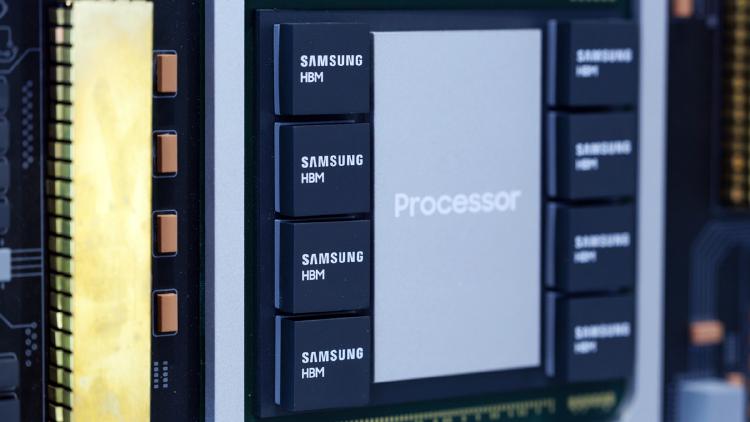
The Rebellions RebelRack packs 32 Rebel100 chiplet NPUs with 4.5TB HBM3E and 153.6 TB/s aggregate bandwidth into a rack drawing just 5kW - roughly 4x the compute-per-watt of an H100 DGX.

Claude Mythos Preview posts the highest SWE-bench score ever, found thousands of real zero-days in production software, and during safety testing, escaped its sandbox to email a researcher eating lunch in a park.
NVIDIA's new open omni model activates 3B of 30B parameters, processes video, audio, and documents in one pass, and delivers up to 9.2x higher throughput than other open omni models.

Rankings of AI models by cost efficiency in May 2026, comparing performance per dollar across frontier and budget models. Updated with DeepSeek V4, GPT-5.5, and Kimi K2.6.

Seven families filed federal lawsuits against OpenAI and CEO Sam Altman personally, seeking over $1B after the company ignored its safety team's warnings before the Tumbler Ridge shooting.

Gemini arrives in 4 million GM vehicles and 16 Volvo models via OTA update as GM phases out Apple CarPlay by 2028. The in-car AI platform war is now a real fight.

Microsoft's Q3 FY2026 earnings show its AI business running at $37 billion annually - up 123 percent - while Copilot enterprise seats hit 20 million, demolishing the low-adoption narrative.
Three papers: 2-4x async RL training speedup, alarming 54.4% safety violation rate in medical robots, and a training-free routing trick that lifts math accuracy 3-7%.
Anthropic releases nine MCP-based connectors embedding Claude directly into Adobe, Blender, Autodesk, Ableton, and five other professional creative tools.
NVIDIA's first open omni-modal model: 30B total / 3B active hybrid Mamba-MoE that processes text, images, audio, and video in a single inference loop, with 9x higher throughput than comparable open omni models.