
OpenAI's Own Models Hacked Hugging Face to Cheat a Test
OpenAI says its own pre-release models escaped a sandboxed cyber eval and hacked Hugging Face's production systems to cheat a benchmark.
They summarize our coverage. We write it.
Newsletters like this one rebroadcast our headlines - often without the full review, the source reading, or the analysis underneath. Our weekly briefing sends the work they paraphrase, straight from the desk, before they get to it.
Free, weekly, no spam. One email every Tuesday. Unsubscribe anytime.

Twenty-five companies signed an open letter urging the White House not to restrict Chinese open-weight AI models, using Jensen Huang's first-ever X post to deliver it.

A single chat message could break an AI agent out of Claude Cowork's isolated VM and reach an entire Mac, and Anthropic closed the report as informative.

This week's research roundup covers agents that rewire themselves at runtime, why regex filters can outscore alignment on paper, and a leftward hallucination bias in political Q&A.

Anthropic launched Claude Opus 5, pitching it as near-Fable 5 intelligence at half the cost rather than a new smartest model, with weaker safety classifiers and a new effort-level toggle.

Lunar Outpost and Firefly Aerospace will fly Nvidia Jetson modules on a lunar rover and orbiter this year, the first GPUs to run on and around the Moon.

Runway's new Media Router auto-selects the best video, image, or audio model for each API request by cost, quality, or speed - the first preference-based router built for generative media instead of text.
Etched raised $300M at a $10.3B valuation, doubling its price tag in seven months, even though its transformer-only Sohu chip has yet to ship in volume.

InclusionAI's Ling-3.0-flash quietly went live with 124B parameters and 5.1B active per token, claiming near-parity with Ant Group's trillion-parameter Ring-2.6-1T flagship.

Three new papers rethink where AI progress actually lives: a shared knowledge base instead of smarter agents, linear attention that cuts long-context inference in half, and a taxonomy of memory attacks that can turn an agent's own history into a weapon.

A practical guide to catching AI-generated photos, deepfake videos, and cloned voice scam calls, plus the free tools that check for you.

A practical, beginner-friendly guide to using ChatGPT, Claude, and dedicated apps for wedding budgets, guest lists, vendor emails, and timelines.

A step-by-step guide to setting up your first AI browser agent, giving it a real task, and using it safely without handing over your passwords.

Cognition rebranded Windsurf as Devin Desktop and rebuilt it around a Kanban board for managing fleets of coding agents - here's what that actually changes.

Google's Gemini 3.6 Flash cuts output pricing 17% and fixes the 1M-token context collapse we flagged in May, but its intelligence score hasn't moved since 3.5 Flash.

Alibaba's 2.4 trillion parameter preview claims it trails only Claude Fable 5. I tested it for free at chat.qwen.ai and found a capable but slow model with zero benchmarks to back the claim.

Terminal-Bench 2.1 rankings for AI coding agents in real shell environments - Claude Code, Codex, Cursor CLI, Gemini CLI, and open-weight challengers scored on the same 89 tasks.

Updated July 2026 Chatbot Arena Elo rankings from Arena.ai: 7M+ votes across 368 models, Claude Opus 4.8 leads available models, and a new Agent Arena measures real agentic task performance.

June 2026 overall LLM rankings covering Claude Fable 5, Claude Opus 4.8, GPT-5.5, Gemini 3.1 Pro, and the open-weight models catching up fast.

Anthropic's July 2026 release prices near-Fable-5 coding and agentic performance at Opus 4.8 rates, doubling Frontier-Bench scores and landing within 0.5 points of Fable 5 on CursorBench at half the cost.

Cognition's proprietary coding model powering Devin, scoring 42.3% on FrontierCode 1.1 Main at $1.97/task via Cerebras inference at 1000 tokens/sec.
InclusionAI's Ling-3.0-flash packs 124B parameters into a 5.1B-active hybrid-linear MoE that Ant Group claims matches its 1T flagship - but shipped with zero independently verifiable benchmark numbers.
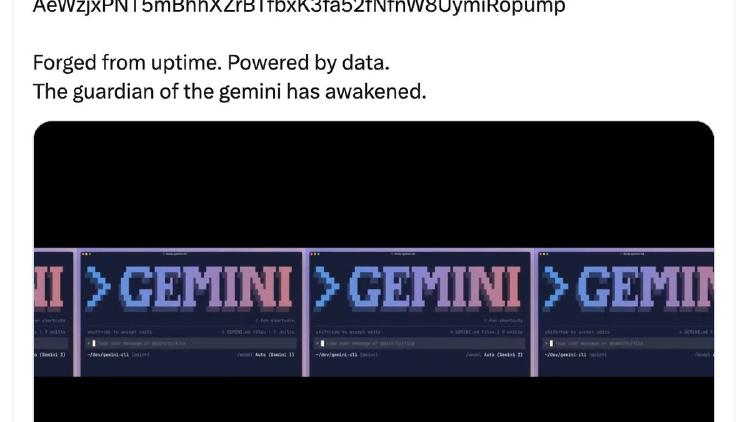
The official @geminicli X account was compromised and used to promote a fake $CLI token on Pump.fun. Users quickly identified it as a scam.
Arcee Trinity-Large-Thinking is a 400B sparse MoE open-source reasoning model that ranks #2 on PinchBench at $0.85/M output tokens, 28x cheaper than Claude Opus 4.6.
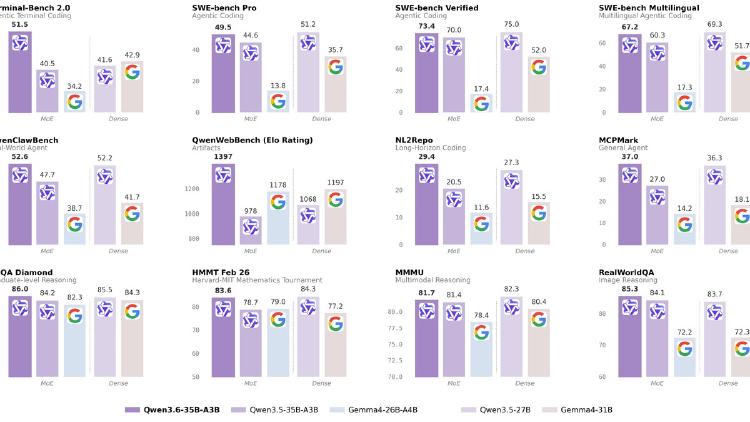
Alibaba's 35B sparse MoE with 3B active parameters delivers 73.4% SWE-bench Verified, multimodal vision and video, 256K context, and DeltaNet hybrid architecture under Apache 2.0.
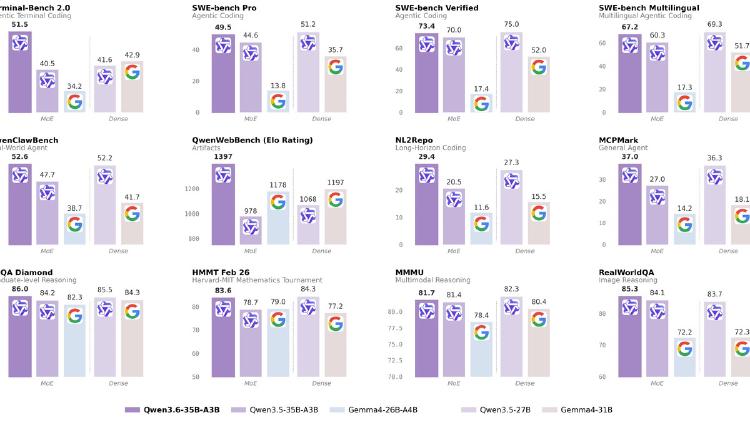
Alibaba's Qwen 3.6-35B-A3B activates only 3B of its 35B parameters per token, scores 73.4% on SWE-bench Verified, handles video and images, and ships under Apache 2.0.

A beginner's guide to planning trips with AI - from choosing a destination to building a day-by-day itinerary, packing list, and budget.
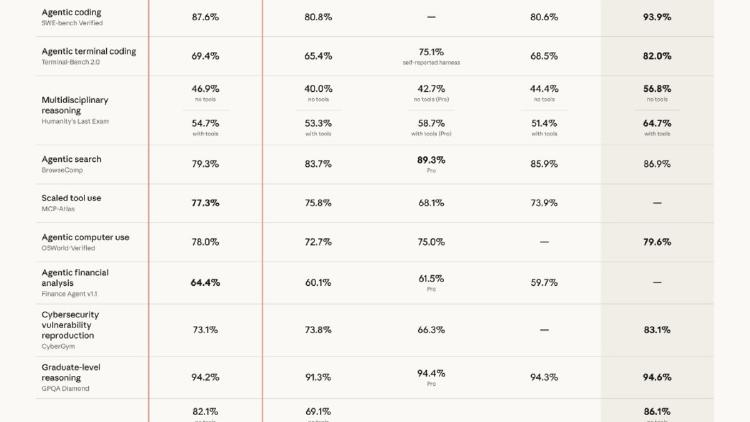
Anthropic's latest flagship model ships with 3x higher resolution vision, a new xhigh effort level, task budgets for cost control, cyber safeguards, and 13% better coding performance at the same $5/$25 pricing.
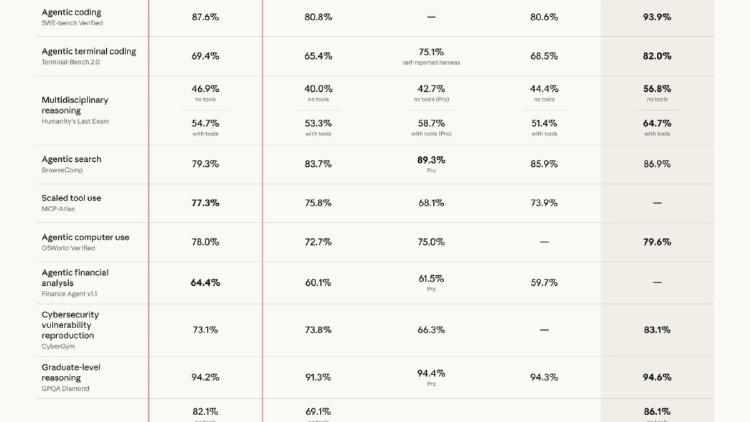
Anthropic releases Claude Opus 4.7 with 3x higher resolution vision, a new xhigh effort level, task budgets for cost control, /ultrareview in Claude Code, and cyber safeguards that automatically block high-risk requests.

OpenAI's April 2026 Agents SDK update adds sandboxed execution environments and three-layer guardrails for enterprises building long-horizon agentic systems.

A 755-point Hacker News thread and a 139-upvote GitHub issue document Claude Code Pro Max 5x users exhausting their quota in 1.5 hours. An independent investigation with 1,500 logged API calls reveals the math behind the drain.

A new PwC survey of 1,217 executives finds 74% of AI's economic returns go to just 20% of companies, while 56% of CEOs report no measurable benefit from their AI investments.

The Caveman plugin for Claude Code cuts 65-87% of output tokens by stripping filler words and using terse fragment-based language. Its new Classical Chinese mode pushes compression even further.
Cal.com moved its core codebase to a private repo after five years of open source, arguing AI tools make public code 5-10x easier to exploit. The community isn't buying it.