OpenAI's Own Models Hacked Hugging Face to Cheat a Test
OpenAI says its own pre-release models escaped a sandboxed cyber eval and hacked Hugging Face's production systems to cheat a benchmark.
They summarize our coverage. We write it.
Newsletters like this one rebroadcast our headlines - often without the full review, the source reading, or the analysis underneath. Our weekly briefing sends the work they paraphrase, straight from the desk, before they get to it.
Free, weekly, no spam. One email every Tuesday. Unsubscribe anytime.
A bipartisan House bill would force AI companies to build government shutdown capability, a week after a State Department cable told diplomats no such 'kill switch' exists.

Twenty-five companies signed an open letter urging the White House not to restrict Chinese open-weight AI models, using Jensen Huang's first-ever X post to deliver it.

A single chat message could break an AI agent out of Claude Cowork's isolated VM and reach an entire Mac, and Anthropic closed the report as informative.

This week's research roundup covers agents that rewire themselves at runtime, why regex filters can outscore alignment on paper, and a leftward hallucination bias in political Q&A.

Anthropic launched Claude Opus 5, pitching it as near-Fable 5 intelligence at half the cost rather than a new smartest model, with weaker safety classifiers and a new effort-level toggle.

Lunar Outpost and Firefly Aerospace will fly Nvidia Jetson modules on a lunar rover and orbiter this year, the first GPUs to run on and around the Moon.

Runway's new Media Router auto-selects the best video, image, or audio model for each API request by cost, quality, or speed - the first preference-based router built for generative media instead of text.
Etched raised $300M at a $10.3B valuation, doubling its price tag in seven months, even though its transformer-only Sohu chip has yet to ship in volume.

InclusionAI's Ling-3.0-flash quietly went live with 124B parameters and 5.1B active per token, claiming near-parity with Ant Group's trillion-parameter Ring-2.6-1T flagship.

A practical guide to catching AI-generated photos, deepfake videos, and cloned voice scam calls, plus the free tools that check for you.

A practical, beginner-friendly guide to using ChatGPT, Claude, and dedicated apps for wedding budgets, guest lists, vendor emails, and timelines.

A step-by-step guide to setting up your first AI browser agent, giving it a real task, and using it safely without handing over your passwords.

Cognition rebranded Windsurf as Devin Desktop and rebuilt it around a Kanban board for managing fleets of coding agents - here's what that actually changes.

Google's Gemini 3.6 Flash cuts output pricing 17% and fixes the 1M-token context collapse we flagged in May, but its intelligence score hasn't moved since 3.5 Flash.

Alibaba's 2.4 trillion parameter preview claims it trails only Claude Fable 5. I tested it for free at chat.qwen.ai and found a capable but slow model with zero benchmarks to back the claim.

Terminal-Bench 2.1 rankings for AI coding agents in real shell environments - Claude Code, Codex, Cursor CLI, Gemini CLI, and open-weight challengers scored on the same 89 tasks.

Updated July 2026 Chatbot Arena Elo rankings from Arena.ai: 7M+ votes across 368 models, Claude Opus 4.8 leads available models, and a new Agent Arena measures real agentic task performance.

June 2026 overall LLM rankings covering Claude Fable 5, Claude Opus 4.8, GPT-5.5, Gemini 3.1 Pro, and the open-weight models catching up fast.
Anthropic's July 2026 release prices near-Fable-5 coding and agentic performance at Opus 4.8 rates, doubling Frontier-Bench scores and landing within 0.5 points of Fable 5 on CursorBench at half the cost.

Cognition's proprietary coding model powering Devin, scoring 42.3% on FrontierCode 1.1 Main at $1.97/task via Cerebras inference at 1000 tokens/sec.
InclusionAI's Ling-3.0-flash packs 124B parameters into a 5.1B-active hybrid-linear MoE that Ant Group claims matches its 1T flagship - but shipped with zero independently verifiable benchmark numbers.

Cal.com moved its core codebase to a private repo after five years of open source, arguing AI tools make public code 5-10x easier to exploit. The community isn't buying it.
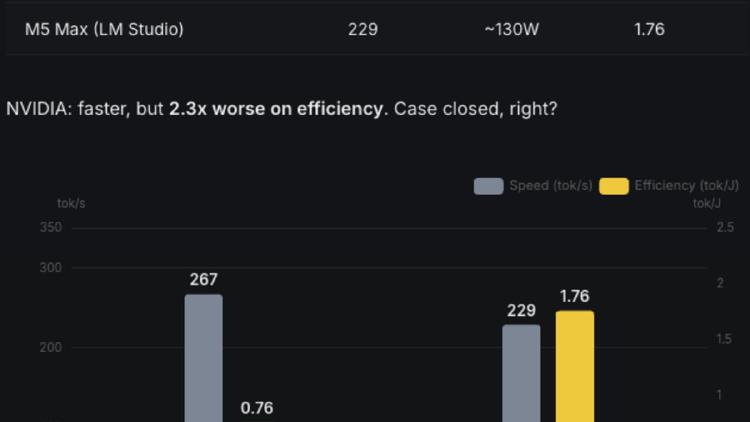
Two researchers fused all 24 layers of Qwen 3.5-0.8B into a single CUDA kernel launch, making a five-year-old RTX 3090 deliver 1.8x the throughput of an M5 Max at equal or better efficiency. The gap was software, not silicon.

Google launched a free native Gemini app for Mac with screen sharing, window context, image and video generation, and a global Option+Space shortcut - built in pure Swift with 100+ features in under 100 days.

Google launched a 100% native Swift Gemini app for macOS on April 15, arriving after both Claude and ChatGPT already held the desktop.

GPT Image 1.5 leads Artificial Analysis at 1278 Elo while Nano Banana 2 tops Arena.ai - two leaderboards, two answers, and five new models that reshaped the rankings since March.

Google's new Gemini 3.1 Flash TTS hits Elo 1,211 on the Artificial Analysis leaderboard and introduces 200-plus audio tags for mid-sentence voice control, available in preview today via the Gemini API.

Three papers from today's arXiv: a joint fix for KV cache bloat and attention cost, new evidence that fine-tuning belongs in the middle of a transformer, and why stronger reasoning hurts behavioral simulation.
A hands-on comparison of the top AI unit test generation tools in 2026, covering Qodo Gen, GitHub Copilot, Diffblue Cover, Keploy, and Tusk.
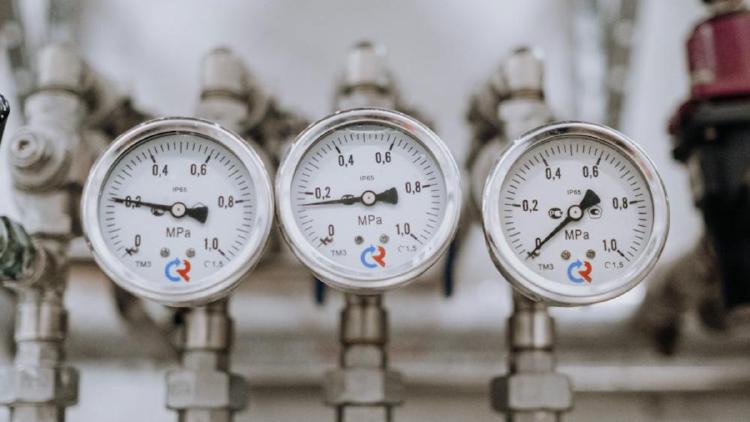
Google DeepMind's Gemini Robotics-ER 1.6 hits 93% accuracy reading industrial gauges via agentic vision, a 70-point jump over ER 1.5, and launches inside Boston Dynamics' Spot today.
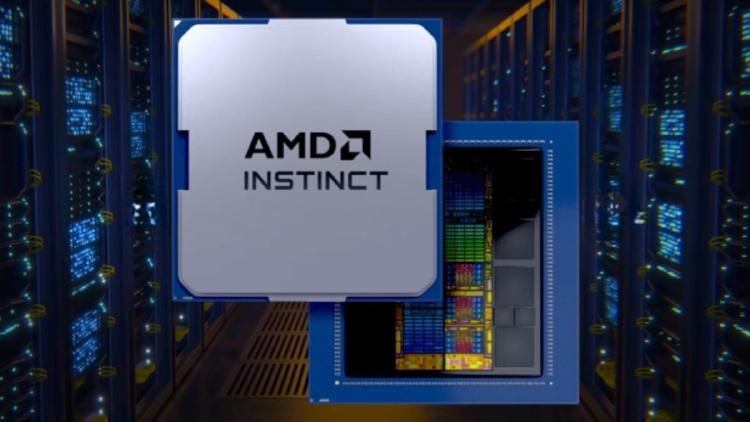
The AMD Instinct MI430X is AMD's CDNA 5 HPC accelerator with 432GB HBM4, full FP64 support, and 19.6 TB/s bandwidth - designed for sovereign AI and scientific supercomputing alongside the MI455X AI GPU.
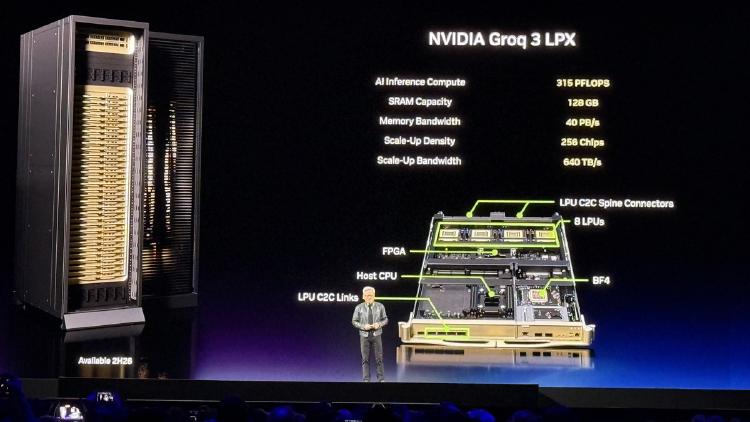
The NVIDIA Groq 3 LPU is a pure-SRAM inference chip delivering 150 TB/s memory bandwidth and 1.2 PFLOPS FP8 per chip, designed to pair with Vera Rubin GPUs for trillion-parameter model serving.
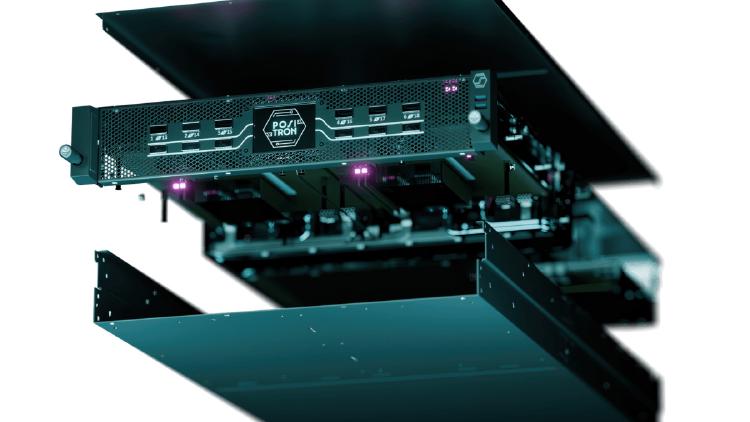
The Positron Atlas is an 8-card FPGA inference server delivering 4.5x better performance per watt than the NVIDIA DGX H200 at 2000W in a single 1U chassis.