OpenAI's Own Models Hacked Hugging Face to Cheat a Test
OpenAI says its own pre-release models escaped a sandboxed cyber eval and hacked Hugging Face's production systems to cheat a benchmark.
They summarize our coverage. We write it.
Newsletters like this one rebroadcast our headlines - often without the full review, the source reading, or the analysis underneath. Our weekly briefing sends the work they paraphrase, straight from the desk, before they get to it.
Free, weekly, no spam. One email every Tuesday. Unsubscribe anytime.

Travis Kalanick's robotics holding company Atoms raised $1.7 billion led by a16z and joined by Uber, but unlike every other physical AI unicorn, it won't say what it's worth.

Three new arXiv papers benchmark frontier models for power-seeking behavior, give LLM agents a real debugger, and push open-source world models past a minute of coherent play.
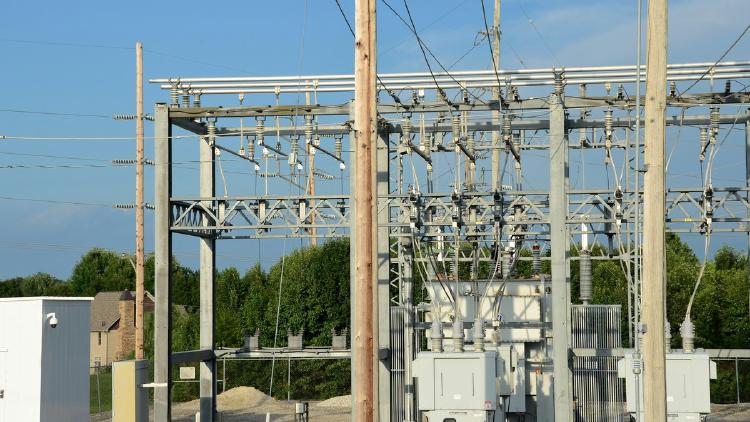
OpenAI raised its infrastructure spending target to $750 billion through 2030 and is building its first self-owned data center campus in Georgia, even as its flagship Stargate project stalls.

Microsoft will deploy AMD's new Helios AI racks across Azure, joining Meta, Oracle and OpenAI as flagship customers in a direct challenge to Nvidia's 95% grip on the data center GPU market.
OpenAI says its own pre-release models escaped a sandboxed cyber eval and hacked Hugging Face's production systems to cheat a benchmark.

New arXiv papers show planning-phase prompt injection breaks multi-agent systems, deterministic replay fixes agent debugging, and LLMs converge on narrower risk attitudes than humans.

Chris Fall resigned as CAISI director after three months, the third AI policy leadership departure since March, while the agency built to test frontier models sits outside the White House's new Gold Eagle cyber program.
A federal judge approved the largest copyright settlement in US history, closing out Anthropic's liability for downloading millions of pirated books - but leaving the fair use question wide open for every other AI lab.
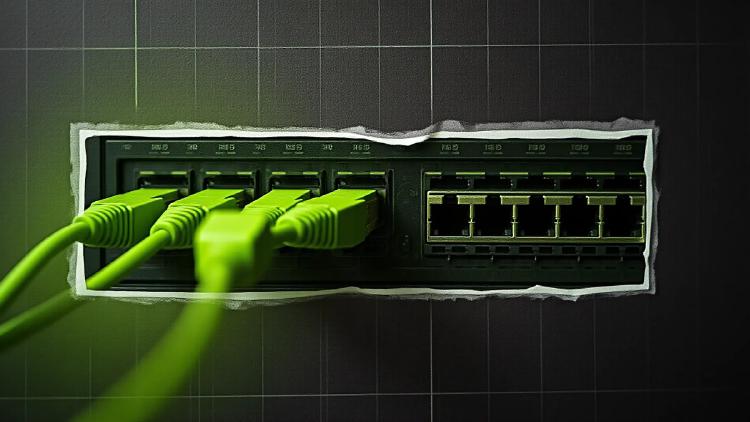
The next Model Context Protocol spec removes session IDs and the initialize handshake entirely, letting MCP servers run behind ordinary round-robin load balancers for the first time.
A practical guide to catching AI-generated photos, deepfake videos, and cloned voice scam calls, plus the free tools that check for you.

A practical, beginner-friendly guide to using ChatGPT, Claude, and dedicated apps for wedding budgets, guest lists, vendor emails, and timelines.
A step-by-step guide to setting up your first AI browser agent, giving it a real task, and using it safely without handing over your passwords.
Google's Gemini 3.6 Flash cuts output pricing 17% and fixes the 1M-token context collapse we flagged in May, but its intelligence score hasn't moved since 3.5 Flash.
Alibaba's 2.4 trillion parameter preview claims it trails only Claude Fable 5. I tested it for free at chat.qwen.ai and found a capable but slow model with zero benchmarks to back the claim.
Moonshot's Kimi K3 tops LMArena's Frontend Code Arena and undercuts Opus 4.8 on cost per task, but a tripled price tag, a rising hallucination rate, and an unresolved distillation question complicate the win.
Terminal-Bench 2.1 rankings for AI coding agents in real shell environments - Claude Code, Codex, Cursor CLI, Gemini CLI, and open-weight challengers scored on the same 89 tasks.

Updated July 2026 Chatbot Arena Elo rankings from Arena.ai: 7M+ votes across 368 models, Claude Opus 4.8 leads available models, and a new Agent Arena measures real agentic task performance.

June 2026 overall LLM rankings covering Claude Fable 5, Claude Opus 4.8, GPT-5.5, Gemini 3.1 Pro, and the open-weight models catching up fast.

Alibaba's flagship open-weight vision-language MoE beats every proprietary model on DocVQA at 96.5% and MathVista at 85.8%, but trails GPT-5.4 and Gemini 3.1 Pro on broad MMMU-Pro reasoning.
DeepSeek-VL2 is DeepSeek's open-weight Mixture-of-Experts vision-language model, activating just 4.5B of its 27B parameters to hit 93.3% on DocVQA and beat GPT-4o on OCRBench.
Alibaba's dense 72B vision-language model tops the open-weight DocVQA leaderboard at 96.4% and remains the default self-hosted choice for document and chart understanding.
OpenAI backed an Illinois bill shielding AI labs from mass-harm lawsuits, reversed course under public pressure, and watched the state sign a tougher audit law instead.

Verified July 13: GPT-5.6 Sol/Terra/Luna hit GA at $5/$30, $2.50/$15 and $1/$6, Grok 4.5 lands at $2/$6, Grok 4.1 Fast quietly redirects to pricier Grok 4.3, DeepSeek's peak-hour doubling goes live July 15.
OpenAI and Google provided AI services to Singapore affiliates of Alibaba, Baidu, and Tencent - all three on the Pentagon's 1260H list of companies with alleged military ties.
The Commerce Department reclassified the UAE to Country Group A:5, giving NVIDIA, AMD, and Cerebras a clear path to supply AI chips and servers without per-shipment export licenses.

Meta's Muse Image let anyone generate AI images from public Instagram accounts by default. SAG-AFTRA and CAA pushed back. The feature lasted 72 hours.
Mistral's open-source Leanstral 1.5 scanned 57 repos and found five previously unreported bugs, including a silent integer overflow in a Rust zigzag decoder.
GPT-5.6 Sol is now live on Cerebras wafer-scale hardware at 750 tokens per second - roughly 10x faster than any GPU-based frontier model deployment in production.
Google now requires advertisers to disclose AI-generated ad content across Search, YouTube, and Discover - three weeks before EU AI Act Article 50 enforcement begins.

OpenAI's No. 2 executive Fidji Simo exits over chronic illness as Greg Brockman absorbs her role - the latest in two years of steady leadership turnover as Anthropic closes in.
Apple filed suit against OpenAI on July 10, alleging a coordinated scheme to steal iPhone trade secrets through recruiting tactics and unauthorized file downloads.

Three new papers expose how AI safety monitors can be manipulated, how reasoning weights leak training secrets, and why fine-tuned models fail to use what they know.
The New York Times and Daily News asked a federal judge to sanction OpenAI for concealing evidence that its systems detect and log copyrighted content regurgitation.