
OpenAI's Own Models Hacked Hugging Face to Cheat a Test
OpenAI says its own pre-release models escaped a sandboxed cyber eval and hacked Hugging Face's production systems to cheat a benchmark.
They summarize our coverage. We write it.
Newsletters like this one rebroadcast our headlines - often without the full review, the source reading, or the analysis underneath. Our weekly briefing sends the work they paraphrase, straight from the desk, before they get to it.
Free, weekly, no spam. One email every Tuesday. Unsubscribe anytime.

Cognition paid a low nine-figure sum for texting assistant Poke, its second acquisition in a year, betting that how an AI agent talks matters as much as what it can do.
A bipartisan House bill would force AI companies to build government shutdown capability, a week after a State Department cable told diplomats no such 'kill switch' exists.
Twenty-five companies signed an open letter urging the White House not to restrict Chinese open-weight AI models, using Jensen Huang's first-ever X post to deliver it.

A single chat message could break an AI agent out of Claude Cowork's isolated VM and reach an entire Mac, and Anthropic closed the report as informative.

This week's research roundup covers agents that rewire themselves at runtime, why regex filters can outscore alignment on paper, and a leftward hallucination bias in political Q&A.

Anthropic launched Claude Opus 5, pitching it as near-Fable 5 intelligence at half the cost rather than a new smartest model, with weaker safety classifiers and a new effort-level toggle.

Lunar Outpost and Firefly Aerospace will fly Nvidia Jetson modules on a lunar rover and orbiter this year, the first GPUs to run on and around the Moon.

Runway's new Media Router auto-selects the best video, image, or audio model for each API request by cost, quality, or speed - the first preference-based router built for generative media instead of text.
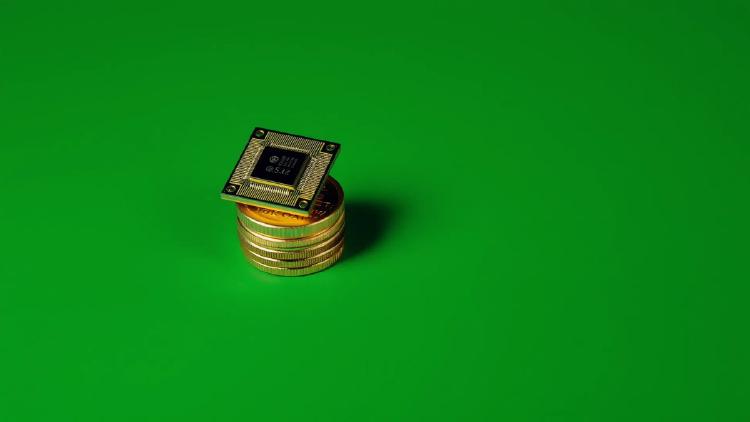
Etched raised $300M at a $10.3B valuation, doubling its price tag in seven months, even though its transformer-only Sohu chip has yet to ship in volume.

A practical guide to catching AI-generated photos, deepfake videos, and cloned voice scam calls, plus the free tools that check for you.

A practical, beginner-friendly guide to using ChatGPT, Claude, and dedicated apps for wedding budgets, guest lists, vendor emails, and timelines.

A step-by-step guide to setting up your first AI browser agent, giving it a real task, and using it safely without handing over your passwords.

Cognition rebranded Windsurf as Devin Desktop and rebuilt it around a Kanban board for managing fleets of coding agents - here's what that actually changes.

Google's Gemini 3.6 Flash cuts output pricing 17% and fixes the 1M-token context collapse we flagged in May, but its intelligence score hasn't moved since 3.5 Flash.

Alibaba's 2.4 trillion parameter preview claims it trails only Claude Fable 5. I tested it for free at chat.qwen.ai and found a capable but slow model with zero benchmarks to back the claim.

Terminal-Bench 2.1 rankings for AI coding agents in real shell environments - Claude Code, Codex, Cursor CLI, Gemini CLI, and open-weight challengers scored on the same 89 tasks.

Updated July 2026 Chatbot Arena Elo rankings from Arena.ai: 7M+ votes across 368 models, Claude Opus 4.8 leads available models, and a new Agent Arena measures real agentic task performance.

June 2026 overall LLM rankings covering Claude Fable 5, Claude Opus 4.8, GPT-5.5, Gemini 3.1 Pro, and the open-weight models catching up fast.

Anthropic's July 2026 release prices near-Fable-5 coding and agentic performance at Opus 4.8 rates, doubling Frontier-Bench scores and landing within 0.5 points of Fable 5 on CursorBench at half the cost.

Cognition's proprietary coding model powering Devin, scoring 42.3% on FrontierCode 1.1 Main at $1.97/task via Cerebras inference at 1000 tokens/sec.
InclusionAI's Ling-3.0-flash packs 124B parameters into a 5.1B-active hybrid-linear MoE that Ant Group claims matches its 1T flagship - but shipped with zero independently verifiable benchmark numbers.

Rankings of AI models on IFEval and IFBench, the two main benchmarks for measuring how reliably LLMs follow precise formatting, length, and content constraints.

LG AI Research released EXAONE 4.5, a 33B open-weight vision-language model that posts higher STEM scores than GPT-5-mini and Claude 4.5 Sonnet - but a non-commercial license caps its real-world reach.

Intel's Arc Pro B70 launched on March 25 with 32GB GDDR6 and 367 TOPS for $949, undercutting NVIDIA's RTX Pro 4000 by $850. The hardware case is strong. The software story is not.

Researchers from Google DeepMind, Microsoft, and Columbia propose financial guardrails for AI agents, with simulations showing up to 61% reduction in user losses.

Three papers expose safety training's moral blind spot, two distinct failure modes inside reasoning models, and a 10x cheaper way to know when a reasoning model is guessing.

Perplexity's annual recurring revenue crossed $450M in March after a 50% single-month jump driven by its Computer agent platform - not search.

Meta's first closed-source frontier model scores 52 on the Artificial Analysis Intelligence Index, leads on HealthBench Hard, and ships free at meta.ai - but has no public API yet.

A practical, step-by-step guide to using AI tools like ChatGPT, Claude, Duolingo Max, and Talkio to learn any language faster - no prior experience needed.

Microsoft pledges $10B to Japan for AI data centers, cybersecurity cooperation, and workforce training from 2026 to 2029, partnering with SoftBank and Sakura Internet.

Father Brendan McGuire, a 60-year-old Silicon Valley priest and former tech executive, helped Anthropic rewrite the Claude Constitution after the company asked the Vatican for help because AI was moving too fast.

Anthropic released Claude Managed Agents in public beta today, a fully managed platform that handles sandboxing, state, and tool execution so developers can skip building agent infrastructure from scratch.
Matei Zaharia wins the 2026 ACM Prize in Computing and claims AGI has arrived, but his own argument - and a $134B company's incentives - complicate the picture.