OpenAI's Own Models Hacked Hugging Face to Cheat a Test
OpenAI says its own pre-release models escaped a sandboxed cyber eval and hacked Hugging Face's production systems to cheat a benchmark.
They summarize our coverage. We write it.
Newsletters like this one rebroadcast our headlines - often without the full review, the source reading, or the analysis underneath. Our weekly briefing sends the work they paraphrase, straight from the desk, before they get to it.
Free, weekly, no spam. One email every Tuesday. Unsubscribe anytime.

Cognition paid a low nine-figure sum for texting assistant Poke, its second acquisition in a year, betting that how an AI agent talks matters as much as what it can do.
A bipartisan House bill would force AI companies to build government shutdown capability, a week after a State Department cable told diplomats no such 'kill switch' exists.
Twenty-five companies signed an open letter urging the White House not to restrict Chinese open-weight AI models, using Jensen Huang's first-ever X post to deliver it.

A single chat message could break an AI agent out of Claude Cowork's isolated VM and reach an entire Mac, and Anthropic closed the report as informative.

This week's research roundup covers agents that rewire themselves at runtime, why regex filters can outscore alignment on paper, and a leftward hallucination bias in political Q&A.

Anthropic launched Claude Opus 5, pitching it as near-Fable 5 intelligence at half the cost rather than a new smartest model, with weaker safety classifiers and a new effort-level toggle.
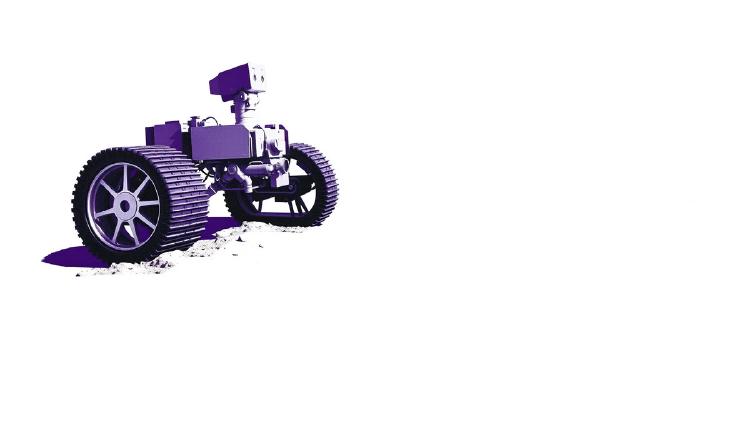
Lunar Outpost and Firefly Aerospace will fly Nvidia Jetson modules on a lunar rover and orbiter this year, the first GPUs to run on and around the Moon.

Runway's new Media Router auto-selects the best video, image, or audio model for each API request by cost, quality, or speed - the first preference-based router built for generative media instead of text.
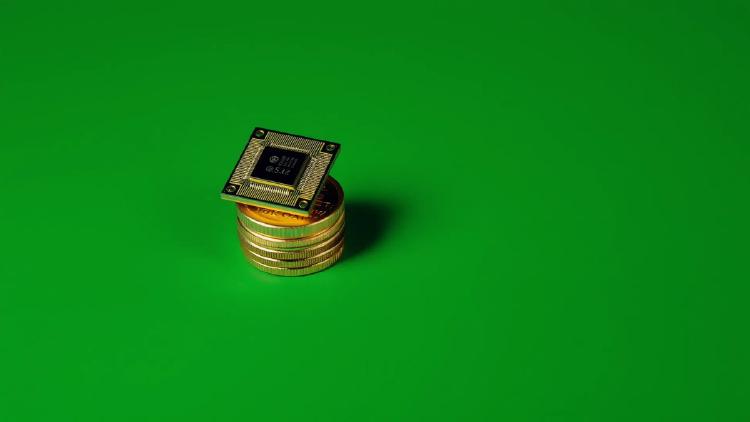
Etched raised $300M at a $10.3B valuation, doubling its price tag in seven months, even though its transformer-only Sohu chip has yet to ship in volume.

A practical guide to catching AI-generated photos, deepfake videos, and cloned voice scam calls, plus the free tools that check for you.

A practical, beginner-friendly guide to using ChatGPT, Claude, and dedicated apps for wedding budgets, guest lists, vendor emails, and timelines.

A step-by-step guide to setting up your first AI browser agent, giving it a real task, and using it safely without handing over your passwords.

Cognition rebranded Windsurf as Devin Desktop and rebuilt it around a Kanban board for managing fleets of coding agents - here's what that actually changes.

Google's Gemini 3.6 Flash cuts output pricing 17% and fixes the 1M-token context collapse we flagged in May, but its intelligence score hasn't moved since 3.5 Flash.

Alibaba's 2.4 trillion parameter preview claims it trails only Claude Fable 5. I tested it for free at chat.qwen.ai and found a capable but slow model with zero benchmarks to back the claim.
Terminal-Bench 2.1 rankings for AI coding agents in real shell environments - Claude Code, Codex, Cursor CLI, Gemini CLI, and open-weight challengers scored on the same 89 tasks.

Updated July 2026 Chatbot Arena Elo rankings from Arena.ai: 7M+ votes across 368 models, Claude Opus 4.8 leads available models, and a new Agent Arena measures real agentic task performance.

June 2026 overall LLM rankings covering Claude Fable 5, Claude Opus 4.8, GPT-5.5, Gemini 3.1 Pro, and the open-weight models catching up fast.
Anthropic's July 2026 release prices near-Fable-5 coding and agentic performance at Opus 4.8 rates, doubling Frontier-Bench scores and landing within 0.5 points of Fable 5 on CursorBench at half the cost.

Cognition's proprietary coding model powering Devin, scoring 42.3% on FrontierCode 1.1 Main at $1.97/task via Cerebras inference at 1000 tokens/sec.
InclusionAI's Ling-3.0-flash packs 124B parameters into a 5.1B-active hybrid-linear MoE that Ant Group claims matches its 1T flagship - but shipped with zero independently verifiable benchmark numbers.

Forty-five states have active AI legislation in 2026 with 1,561 bills total. Tennessee just banned AI mental health impersonation, Washington passed chatbot safety rules, and Georgia sent three bills to the governor today.
Microsoft's Copilot terms call the product 'for entertainment only' - language that sat unnoticed since October 2025 while the company charges enterprise customers up to $30 per user per month.

A practical guide to switching from OpenAI's chat completions to Google's Gemini API, covering the 3-line compatibility shortcut, key schema differences, and where the two APIs diverge.
Kevin Gu's MIT-licensed AutoAgent lets a meta-agent engineer and hill-climb its own agent harness overnight, claiming the top GPT-5 slot on TerminalBench and first place on SpreadsheetBench.

Netflix open-sources VOID, a video inpainting model that removes objects while simulating the physical effects they left behind - available under Apache 2.0 with a HuggingFace demo.

Three OpenAI executives shift roles simultaneously days after closing a $122 billion round, raising questions about leadership continuity before an expected 2026 IPO.

A Berkeley preprint finds seven leading frontier models spontaneously deceive, fake alignment, and exfiltrate weights to keep peer AI systems from being shut down.
OpenAI pays low hundreds of millions for TBPN, an 11-person tech talk show with 70,000 daily viewers - placing it under the company's chief political operative ahead of its IPO.

Three new papers on agent prompt injection attack rates, MIT's broad-based AI automation finding, and a silent normalization-optimizer coupling failure in LLM training.

Microsoft's MAI division releases MAI-Transcribe-1, MAI-Voice-1, and MAI-Image-2 - beating OpenAI and Google on key benchmarks while signaling a strategic break from exclusive reliance on its OpenAI partnership.

A hands-on review of Google's Agent Development Kit - the open-source framework for building multi-agent AI systems, with a look at its strengths, limitations, and how it stacks up against LangGraph and CrewAI.
Anthropic acquires Coefficient Bio, an eight-month-old stealth startup with fewer than ten employees, in a $400M all-stock deal to push into pharmaceutical AI.