Best AI Code Review Tools in 2026: 7 Options Tested and Compared
A data-driven April 2026 comparison of the top AI code review tools, including CodeRabbit, Qodo, Greptile, DeepSource, Sourcery, GitHub Copilot, and Claude Code /ultrareview.
They summarize our coverage. We write it.
Newsletters like this one rebroadcast our headlines - often without the full review, the source reading, or the analysis underneath. Our weekly briefing sends the work they paraphrase, straight from the desk, before they get to it.
Free, weekly, no spam. One email every Tuesday. Unsubscribe anytime.

A data-driven April 2026 comparison of the top AI code review tools, including CodeRabbit, Qodo, Greptile, DeepSource, Sourcery, GitHub Copilot, and Claude Code /ultrareview.

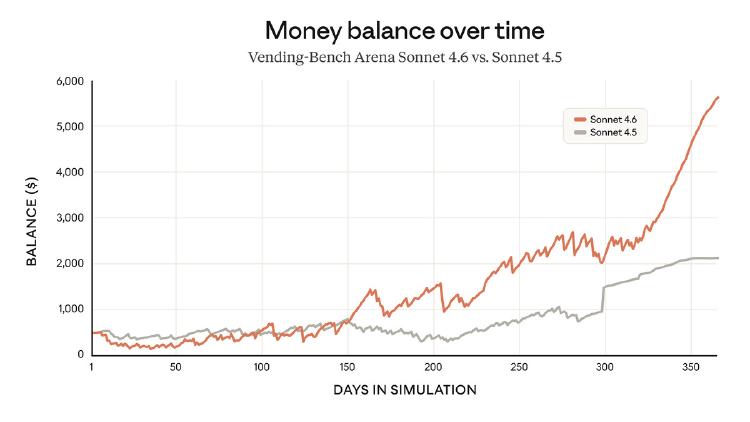
Anthropic's new mid-tier model matches Opus 4.6 on coding benchmarks, ships a million-token context window, and keeps the same $3/$15 pricing as its predecessor.

Compare the top AI coding assistants of 2026: GitHub Copilot, Cursor, Claude Code, Windsurf, Augment Code, Amazon Q Developer, Cody, JetBrains AI, Aider, Gemini CLI. Pricing and recommendations.

Rankings of the best AI models for coding tasks across SWE-Bench, Terminal-Bench, and LiveCodeBench benchmarks, measuring real-world software engineering and algorithmic problem-solving ability.

A beginner's guide to AI coding assistants in 2026, covering GitHub Copilot, Cursor, Claude Code, and Aider with practical setup instructions and realistic expectations.

OpenAI releases GPT-5.3-Codex, a frontier coding model that is 25% faster, sets new records on SWE-Bench Pro and Terminal-Bench 2.0, and was instrumental in creating itself.

Z.ai releases GLM-5, a 744B parameter open-source Mixture-of-Experts model purpose-built for agentic tasks, scoring 77.8% on SWE-bench Verified and 56.2% on Terminal-Bench 2.0.

A thorough review of Cursor, the VS Code fork that has become the gold standard for AI-assisted coding with Composer mode, full project understanding, and multi-file edits.

Anthropic's November 2025 flagship model delivers top SWE-bench scores, a new effort parameter for reasoning control, and a 66% price cut from its predecessor.

Anthropic's fastest and most cost-efficient model, delivering 73.3% on SWE-bench Verified and first-in-family extended thinking and computer use at $1/$5 per million tokens.

OpenAI's open-weight 21B MoE reasoning model with 131K context, Apache 2.0 license, and o3-mini-level benchmark performance running in 16 GB of memory.

OpenAI's maximum-compute reasoning model targets the hardest problems where o3 falls short, at $20/$80 per million tokens.