

Best AI Coding Agents 2026: 6 Tools Tested and Ranked
A benchmark-driven comparison of Claude Code, Kiro, Devin, OpenAI Codex, Windsurf, and OpenHands - the six coding agents worth using in 2026.
They summarize our coverage. We write it.
Newsletters like this one rebroadcast our headlines - often without the full review, the source reading, or the analysis underneath. Our weekly briefing sends the work they paraphrase, straight from the desk, before they get to it.
Free, weekly, no spam. One email every Tuesday. Unsubscribe anytime.
A benchmark-driven comparison of Claude Code, Kiro, Devin, OpenAI Codex, Windsurf, and OpenHands - the six coding agents worth using in 2026.

Microsoft's open-source ASSERT framework turns natural language behavior specs into executable, auditable test suites for AI agents and LLM applications.

Claude Opus 4.8 sets new highs on SWE-bench Pro and long-context tasks while a 4x improvement in code flaw detection may matter more than any benchmark number.

Complete benchmark and pricing comparison of Claude Opus 4.8 vs GPT-5.5 for coding, agents, and knowledge work in 2026.
Cohere Command A+ is a 218B sparse MoE model with Apache 2.0 license, native citations, and a 128K context window that runs on just two H100 GPUs.

Three papers: smarter CoT trimming cuts reasoning length by 50%, a plug-in context manager rescues frozen agents on long tasks, and a 960K-item clinical benchmark exposes LLM gaps in hospitals.

Mistral rebrands Le Chat as Vibe, ships Work Mode with enterprise integrations, a VS Code extension, and remote coding agents powered by Mistral Medium 3.5 at 77.6% SWE-Bench.

Current rankings of the best AI image generation models, including GPT Image 2, Nano Banana 2, Recraft V4.1, HiDream-O1-Image, FLUX 2, Midjourney v8.1, and Ideogram 3.0, scored on human preference, text rendering, and photorealism.
NVIDIA Cosmos 3 is an open physical AI omnimodel with Mixture-of-Transformers architecture that natively handles text, images, video, sound, and robot actions in a single 16B or 64B model.
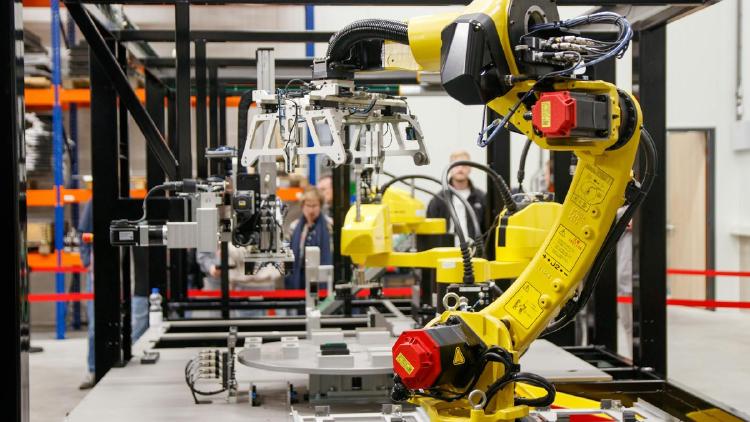
Nvidia's Cosmos 3 is the first fully open omnimodel for physical AI, trained on 20 trillion tokens to teach robots and autonomous vehicles how to reason and act in the real world.

Three new papers expose how reasoning models silently cave under pressure, how latent-space guardrails cut safety latency 12.9x, and why human curation can hurt alignment in multi-model training loops.
Anthropic's May 2026 flagship model delivers 69.2% on SWE-bench Pro, dynamic parallel workflows in research preview, and Effort Control - all at $5/$25 pricing.
