

Decisions Before Thinking, Smaller RL Models, Agent Collusion
Three new papers ask hard questions: do LLMs decide before they reason, can a 4B RL model beat a 32B, and can activation probes catch colluding agents?
They summarize our coverage. We write it.
Newsletters like this one rebroadcast our headlines - often without the full review, the source reading, or the analysis underneath. Our weekly briefing sends the work they paraphrase, straight from the desk, before they get to it.
Free, weekly, no spam. One email every Tuesday. Unsubscribe anytime.
Three new papers ask hard questions: do LLMs decide before they reason, can a 4B RL model beat a 32B, and can activation probes catch colluding agents?

Grok 4.20 is xAI's current flagship LLM with a 2M-token context window, native multi-agent mode, and reasoning toggle at $2.00/M input tokens.

Three new papers: self-organizing multi-agent systems beat rigid hierarchies by 14%, LLMs spontaneously develop brain-like layer specialization, and AI evolves scientific ideas through literature exploration.

Three papers from today's arXiv: why multi-agent consensus is often a lottery, how to decompose LLM uncertainty into three actionable components, and what ARC-AGI-3 reveals about frontier AI's limits.

Three new arXiv papers tackle constitutional AI rule learning, sleeper agent defense for multi-agent pipelines, and skill-evolving reinforcement learning for math reasoning.

Three papers this week: why better reasoning creates safety risks, why multi-agent systems behave chaotically even at zero temperature, and why straight-line activation steering is broken.

Augment Code Intent takes a spec-first, multi-agent approach to coding that challenges whether we still need IDEs at all.

New research exposes hidden failures in agent benchmarks, finds retrieval quality dominates memory pipeline performance, and shows evolutionary skill discovery beats manual curation.

AlphaEvolve evolved two novel game theory algorithms - VAD-CFR and SHOR-PSRO - that outperform human-designed baselines across 11 games, using mechanisms no researcher would have designed.

OpenAI's Codex CLI 0.105.0 adds voice dictation, a theme picker, idle-sleep prevention, customizable Plan Mode, and a ground-up rebuild of the multi-agent system with configurable depth and custom roles.

A 38-researcher red-teaming study deployed five autonomous AI agents with email, shell access, and persistent memory in a live environment. In two weeks, one destroyed its own mail server, two got stuck in a 9-day infinite loop, and another leaked SSNs because you said 'forward' instead of 'share.'
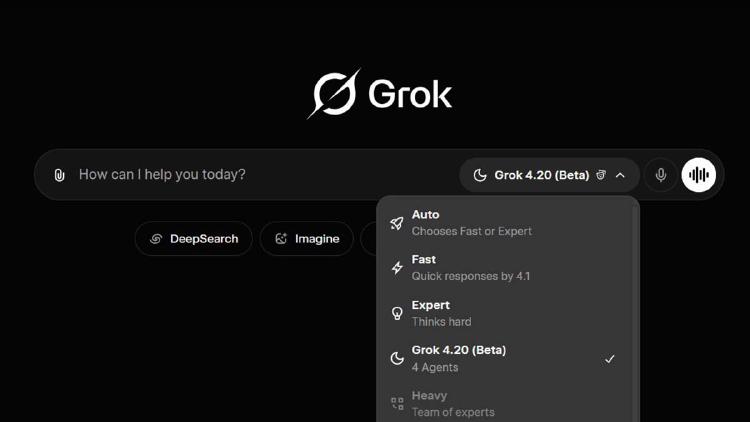
xAI's Grok 4.20 replaces the single-model approach with four specialized AI agents - Grok, Harper, Benjamin, and Lucas - that reason in parallel, fact-check each other, and synthesize answers collaboratively.
