
Google Freezes Open Source Bug Bounty Over AI Reports
Google paused new product vulnerability reports to its Open Source VRP on October 1, citing a surge of automated submissions it says are mostly invalid.
They summarize our coverage. We write it.
Newsletters like this one rebroadcast our headlines - often without the full review, the source reading, or the analysis underneath. Our weekly briefing sends the work they paraphrase, straight from the desk, before they get to it.
Free, weekly, no spam. One email every Tuesday. Unsubscribe anytime.
Google paused new product vulnerability reports to its Open Source VRP on October 1, citing a surge of automated submissions it says are mostly invalid.

Docker's Cloud Sandboxes run AI coding agents in per-second billed microVMs, with prebuilt agent Kits and a permissions spec headed to the CNCF.

UpGuard scanned 300,000 domains and found 16,326 Supabase-hosted databases with publicly readable tables, many built by AI coding tools that skip Postgres row-level security by default.

PrismML's smallest Bonsai checkpoint compresses Qwen3-1.7B under 0.5GB, and now powers the vision-language model behind Qualcomm's Snapdragon AR1 smart glasses demo.
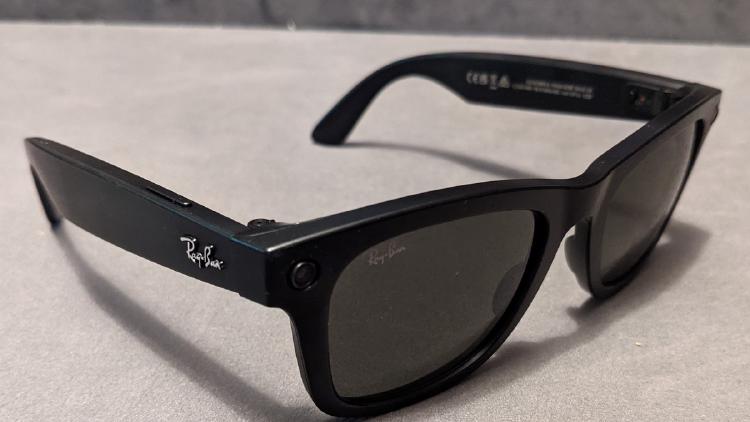
PrismML and Qualcomm demoed a 2-billion-parameter vision-language model running in 1-bit precision on Snapdragon AR1 Gen 1 smart glasses hardware at Snapdragon Summit.

Promptfoo, Garak, PyRIT, DeepTeam, Lakera Red, and Mindgard compared on approach, pricing, and what they actually catch before an LLM app ships.
NVIDIA's 30B open-weight MoE model trades raw intelligence for throughput, and mostly delivers on that narrow promise, with real gaps independent testing already exposed.

River AI says it will free users from renting AI from closed labs. General Catalyst, AMP PBC, Temasek and NVIDIA, the money behind that pitch, are also major Anthropic investors.

NVIDIA distilled its 550B Nemotron 3 Ultra down to a 30B MoE model with 3B active parameters, aimed at the boring, high-volume work inside agent pipelines.

NVIDIA's 30B MoE model with 3B active parameters, distilled from Nemotron 3 Ultra, hits 86% PinchBench accuracy at up to 4x the output speed of comparable open models.
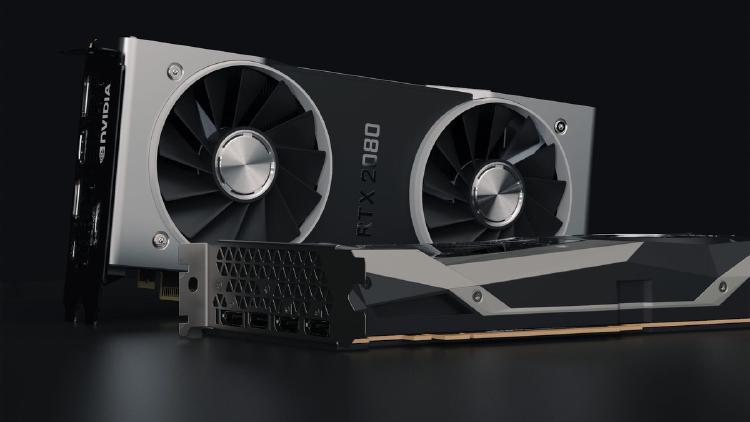
Meta's 30B open-weight local agent model beats its closest open rivals on independent tool-use tests, but trails on long agent sessions and on prompt-injection resistance.

Meta's 30B open-weight agentic model distilled from Muse Spark runs on a single consumer GPU, ships under Apache 2.0, and leads Gemma4-31B and Qwen3.6-27B on 5 of 8 agentic benchmarks.
