

AI Security Research and Incident Coverage
Tracking AI supply-chain attacks, agent exploits, prompt injection, model leaks, and the real-world incidents shaping AI security today.
They summarize our coverage. We write it.
Newsletters like this one rebroadcast our headlines - often without the full review, the source reading, or the analysis underneath. Our weekly briefing sends the work they paraphrase, straight from the desk, before they get to it.
Free, weekly, no spam. One email every Tuesday. Unsubscribe anytime.
Tracking AI supply-chain attacks, agent exploits, prompt injection, model leaks, and the real-world incidents shaping AI security today.

Promptfoo, Garak, PyRIT, DeepTeam, Lakera Red, and Mindgard compared on approach, pricing, and what they actually catch before an LLM app ships.
Anthropic is making Claude Code's auto mode the default for Pro, Max, and Team plans on August 14, citing a study where a classifier caught 89% of dangerous commands versus 13.6% for human reviewers.
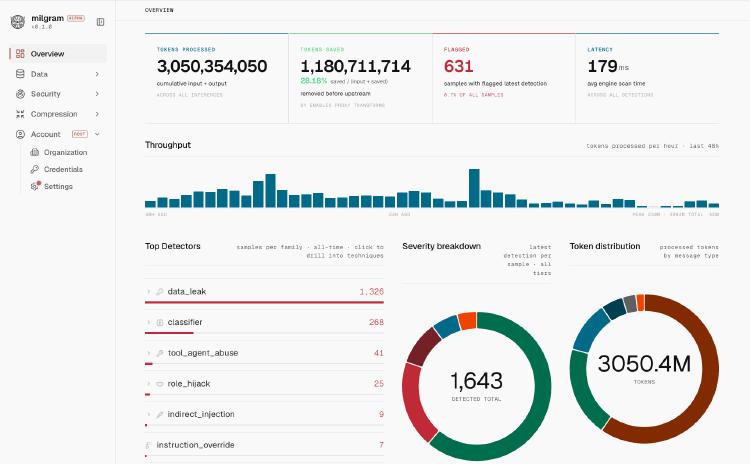
We tested four enterprise LLM firewalls - Milgram, Lakera Guard, Palo Alto Prisma AIRS and Prompt Security - on prompt injection detection, data leakage prevention, enforcement and inference cost.

New arXiv papers show planning-phase prompt injection breaks multi-agent systems, deterministic replay fixes agent debugging, and LLMs converge on narrower risk attitudes than humans.

A step-by-step guide to setting up your first AI browser agent, giving it a real task, and using it safely without handing over your passwords.

New research reveals MCP error messages triple agent attack success rates, ranks eight models on sycophancy with Claude scoring best, and finds self-evolving agents make 30-42% false edits.

OpenAI's new Lockdown Mode cuts the network exits that prompt injection attacks use to steal data from ChatGPT - but won't stop malicious instructions from entering the model in the first place.

Google's new AI Overviews respond to words like 'disregard,' 'ignore,' and 'dismiss' as LLM instructions rather than vocabulary queries, leaving users with blank search results.

Three new papers on agent prompt injection attack rates, MIT's broad-based AI automation finding, and a silent normalization-optimizer coupling failure in LLM training.

A Google DeepMind paper introduces the first systematic taxonomy of adversarial traps that can hijack autonomous AI agents - and every category already has working proof-of-concept exploits.

Johns Hopkins and Microsoft's JBDistill achieves 81.8% attack success rate across 13 LLMs by auto-generating fresh adversarial prompts on demand.
