

Discord Group Slipped Into Claude Mythos on Day One
A private Discord group has been quietly using Anthropic's most restricted AI model since the hour it shipped. They got in with a stolen contractor badge and a URL guessed from the Mercor breach.
They summarize our coverage. We write it.
Newsletters like this one rebroadcast our headlines - often without the full review, the source reading, or the analysis underneath. Our weekly briefing sends the work they paraphrase, straight from the desk, before they get to it.
Free, weekly, no spam. One email every Tuesday. Unsubscribe anytime.
A private Discord group has been quietly using Anthropic's most restricted AI model since the hour it shipped. They got in with a stolen contractor badge and a URL guessed from the Mercor breach.

OpenAI's GPT-5.4-Cyber is a cyber-permissive fine-tune of GPT-5.4 Thinking with binary reverse engineering, 88.23% on professional CTFs, and access gated through the Trusted Access for Cyber program.

We audited ten AI agent products sold under the Claw name. The ledger shows 11 live CVEs, 130 published advisories, 1,184 malicious marketplace skills, and one leaked SSL private key - concentrated almost entirely in a single vendor.

A fresh warning from developer Morgan Linton says free Lovable accounts can still read other users' AI chat histories, source code, and database credentials on projects created before November 2025. The pattern is the same one that earned the platform CVE-2025-48757 last year.

We pulled 11,447 MCP servers from four registries, ran the GitHub and OSV APIs against them, and tried to install the top 100. Nearly a third haven't been touched in six months.

Vercel confirms an April 19 intrusion that pivoted from compromised OAuth tokens at AI office-suite startup Context.ai into a Vercel employee's Google Workspace, then into internal systems holding non-sensitive environment variables for a limited set of customer projects.

Rankings of 14 frontier LLMs by adversarial robustness - how well they resist jailbreaks, prompt injection, and harmful-behavior elicitation across HarmBench, AdvBench, StrongREJECT, JailbreakBench, and AgentHarm.

Sam Altman's World project launched World ID 4.0 at a San Francisco event on April 17, signing Tinder, Zoom, DocuSign, and Okta as partners while introducing Agent Kit to authorize AI agents.

Ox Security found that MCP's STDIO transport executes arbitrary OS commands before validating the server, exposing 200K+ instances across every major AI coding tool.
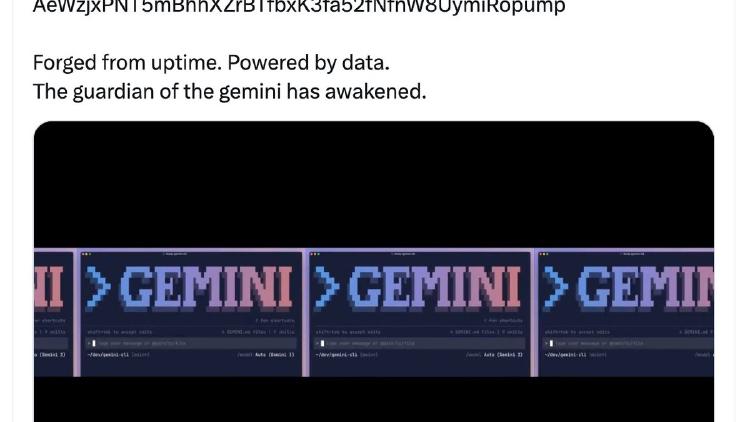
The official @geminicli X account was compromised and used to promote a fake $CLI token on Pump.fun. Users quickly identified it as a scam.

Cal.com moved its core codebase to a private repo after five years of open source, arguing AI tools make public code 5-10x easier to exploit. The community isn't buying it.

OpenAI's GPT-5.4-Cyber is a fine-tuned defensive cybersecurity model with binary reverse engineering, lowered refusal thresholds, and restricted access through the Trusted Access for Cyber program.
